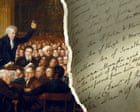
Baptism record at Manchester Cathedral offers insight into Black Mancunian life in Georgian-era England
The News
A baptism record at Manchester Cathedral offers new insight into Black Mancunian life during the Georgian era. The rediscovered parish entry is significant given the limited historical knowledge about Black people in Manchester at that time. It relates to Thomas Clarkson's 1787 sermon at the cathedral, during which he observed a large Black audience. This record contributes to understanding the Black presence in England during the abolitionist period.
Infographic
No infographic was generated for this story. GreyNews is not leaving this spinning indefinitely.
The Analysis
Intelligence Brief
Analyzed · High confidence (85%)
Same as the summary above — this brief adds the distinct fields below.
Abolitionist Thomas Clarkson's sermon aimed to end the slave trade
Thomas Clarkson gave a sermon in 1787 at Manchester Cathedral.
5 claims still need verification.
No forecast extracted yet.
Key findings
A parish entry reveals an argument that proved pivotal to the abolitionist cause.
The Guardian- Abolitionist Thomas Clarkson's sermon aimed to end the slave trade
- The parish record reveals an argument pivotal to the abolitionist cause
Trust Breakdown
Plain English
Loaded language removed<p>A parish entry reveals an argument that proved pivotal to the abolitionist cause, at a time when an estimated 20,000 Black people were living in the country</p><p>When the abolitionist Thomas Clarkson gave a sermon in 1787 at Manchester Cathedral – during the city’s first mass meeting against the transatlantic trade in enslaved Africans – he saw a “great crowd of black people standing round…
Emotionally neutral rewrite. Same facts, calmer framing.
What's next
This angle has contested claims
Claims
A parish entry reveals an argument that proved pivotal to the abolitionist cause.
The GuardianAt that time, an estimated 20,000 Black people were living in the country.
The GuardianOne recently rediscovered entry in parish records at Manchester Cathedral is particularly significant.
OpinionThomas Clarkson gave a sermon in 1787 at Manchester Cathedral.
The GuardianLittle is known about Black Mancunians in the Georgian era.
The Guardian