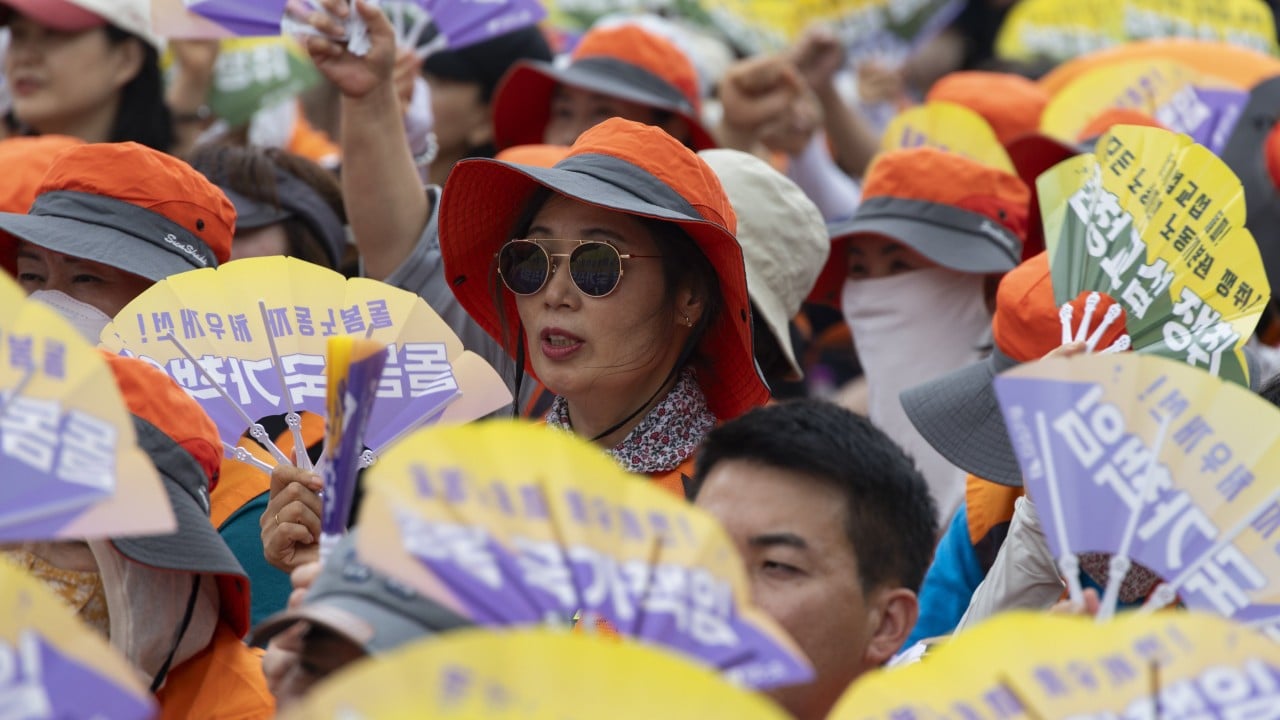
South Korean unions use new labour rules to push envelope on bonus demands
The News
Four months after implementation, South Korea's new labour law, the Yellow Envelope Act, is facing scrutiny as workers demand bonuses tied to a fixed percentage of corporate profits. Critics warn that unchecked, the law could fuel labour disputes, create business uncertainty, and threaten the country's recovering economy. The revised Trade Union and Labour Relations Adjustment Act is at the center of growing labour activism and concern over economic stability.
Infographic
The Analysis
Intelligence Brief
Analyzed
Same as the summary above — this brief adds the distinct fields below.
Bonus demands tied to fixed percentage of corporate profits
The Yellow Envelope Act has been implemented for four months.
4 claims still need verification.
No forecast extracted yet.
4 unresolved.
Key findings
The Yellow Envelope Act has been implemented for four months.
South China Morning Post- Bonus demands tied to fixed percentage of corporate profits
- Threat to economy beginning to recover
Plain English
Loaded language removedOnly four months into its implementation, South Korea's new labour rules are coming under growing scrutiny as workers' demands for bonuses tied to a fixed percentage of corporate profits spread across the country.
Emotionally neutral rewrite. Same facts, calmer framing.
What's next
This angle has contested claims
Claims
The Yellow Envelope Act has been implemented for four months.
South China Morning PostCritics warn the Yellow Envelope Act could fuel labour disputes, create uncertainty for businesses, and threaten the recovering economy.
PredictionThe Yellow Envelope Act is a labour-friendly law.
OpinionWorkers are demanding bonuses tied to a fixed percentage of corporate profits.
South China Morning Post