
‘Forever chemicals’ linked to gut inflammation in children after early exposure
The News
A study tracked mother-child pairs for up to 11 years to investigate the effects of PFAS exposure on gut health. The research found a probable link between prenatal and early life exposure to PFAS mixtures and higher levels of intestinal inflammation in children. The findings are based on a first-of-its-kind study, suggesting that early exposure to these 'forever chemicals' may affect developing guts. This research highlights potential health risks of PFAS, which are persistent in the environment and human body.
Infographic
The Analysis
Intelligence Brief
Analyzed
A study tracked mother-child pairs for up to 11 years to investigate the effects of PFAS exposure on gut health. The research found a probable link between prenatal and early life exposure to PFAS mixtures and higher levels of intestinal inflammation in children. The findings are based on a first-of-its-kind study, suggesting that early exposure to these 'forever chemicals' may affect developing guts. This research highlights potential health risks of PFAS, which are persistent in the environme...
Researchers tracked mother-child pairs for up to 11 years
Researchers tracked mother-child pairs for up to 11 years.
3 claims still need verification.
No forecast extracted yet.
3 unresolved.
Key findings
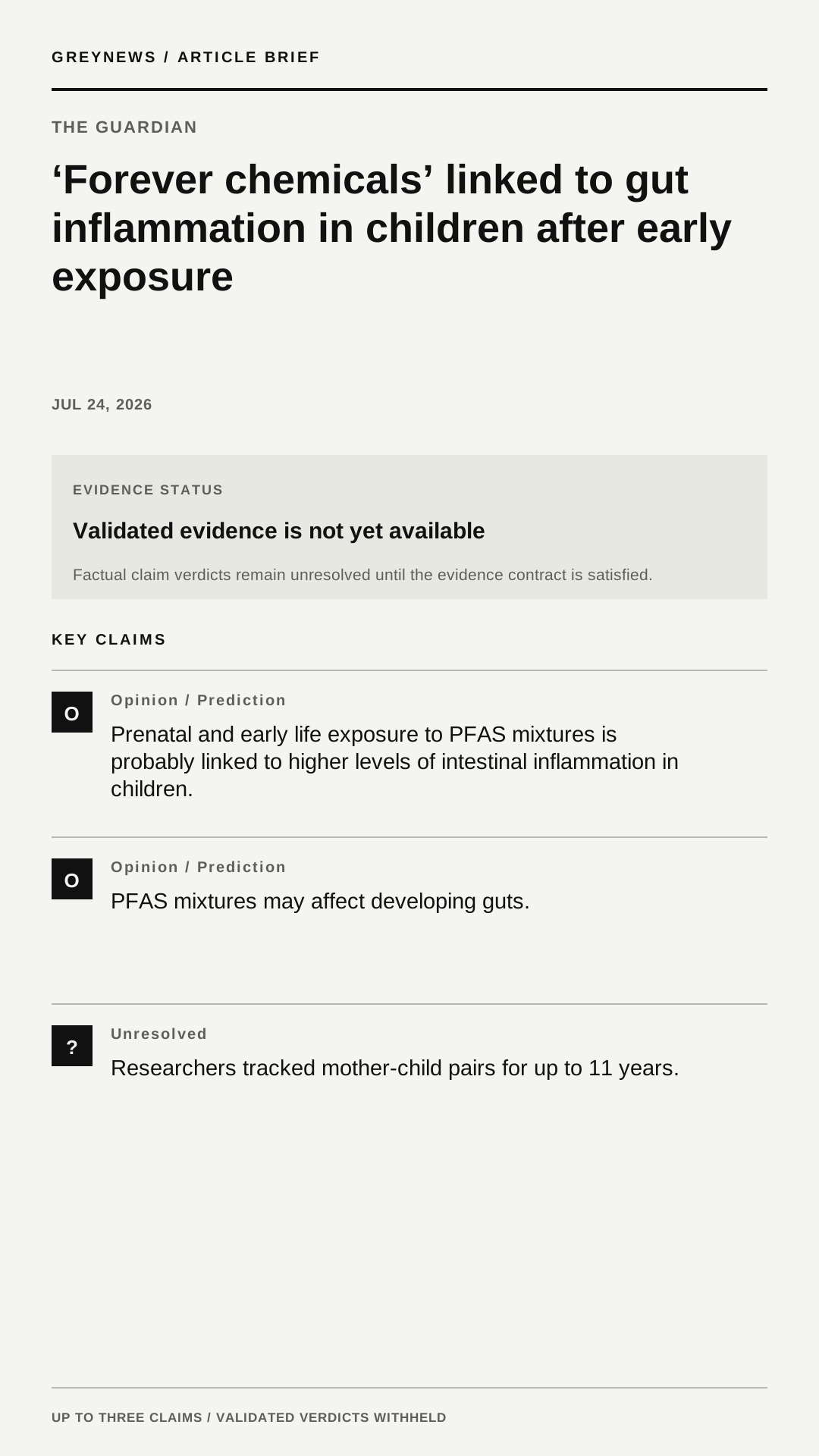
Prenatal and early life exposure to PFAS mixtures is probably linked to higher levels of intestinal inflammation in children.
Prediction- Researchers tracked mother-child pairs for up to 11 years
- PFAS mixtures may affect developing guts
Plain English
Loaded language removedResearchers tracked mother-child pairs for up to 11 years, finding PFAS mixtures may affect developing guts. New research suggests prenatal and early life exposure to PFAS mixtures is probably linked to higher levels of intestinal inflammation in children.
Emotionally neutral rewrite. Same facts, calmer framing.
What's next
This angle has contested claims
Claims
Prenatal and early life exposure to PFAS mixtures is probably linked to higher levels of intestinal inflammation in children.
PredictionPFAS mixtures may affect developing guts.
PredictionResearchers tracked mother-child pairs for up to 11 years.
The Guardian