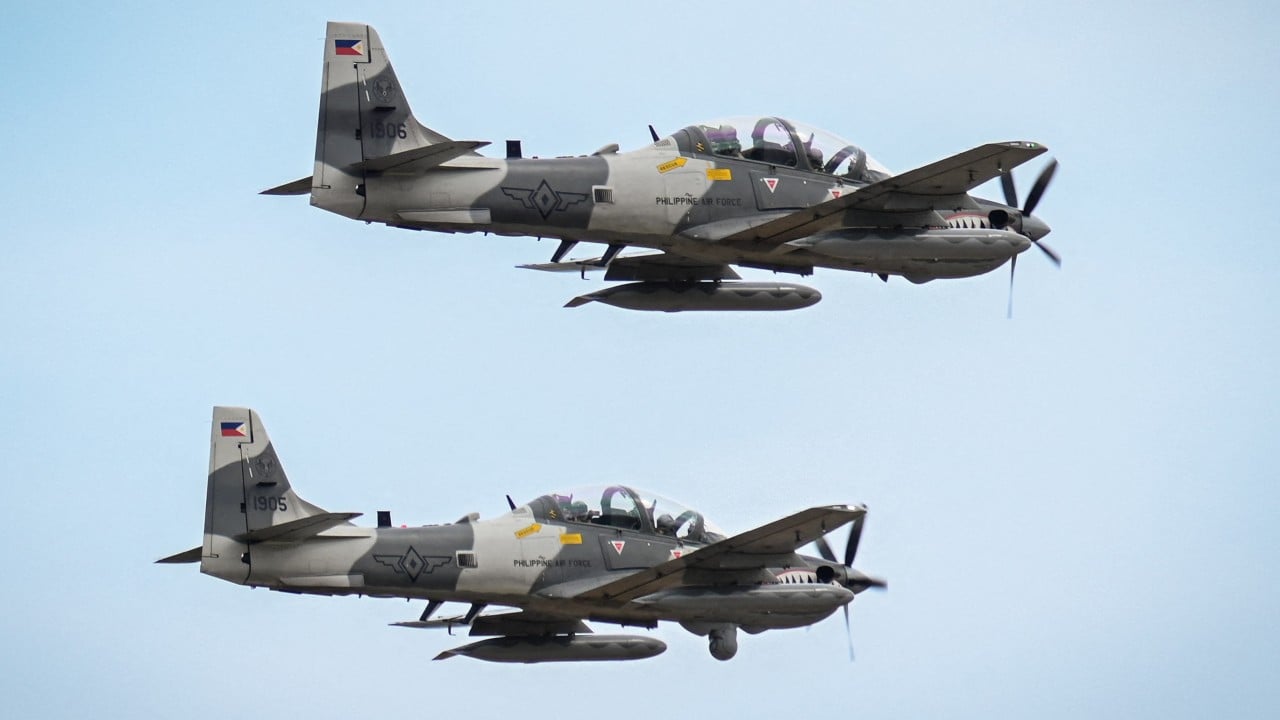
Outgunned Philippine Air Force takes on South China Sea defence
The News
The Philippine Air Force, traditionally focused on counterinsurgency operations, is being reoriented to defend the South China Sea amid rising tensions. Analysts consider it the weakest air force among major Southeast Asian nations. The air force spokeswoman emphasized the need to strengthen air assets due to the country's archipelagic nature. This shift highlights the challenges smaller states face in asserting claims in contested waters.
Infographic
No infographic was generated for this story. GreyNews is not leaving this spinning indefinitely.
The Analysis
Intelligence Brief
Analyzed · Moderate confidence (72%)
Same as the summary above — this brief adds the distinct fields below.
Tensions in the South China Sea driving defense changes
For decades, the Philippine Air Force hunted communist rebels and Islamist militants.
4 claims still need verification.
No forecast extracted yet.
Key findings
Analysts rank the Philippine Air Force as the weakest air arm among Southeast Asia’s six largest militaries.
Opinion- Tensions in the South China Sea driving defense changes
- Philippines as a claimant state
Trust Breakdown
Plain English
Loaded language removedFor decades, the Philippine Air Force hunted communist rebels and Islamist militants in the country’s forests and southern islands. Now, amid seemingly intractable tensions in the South China Sea, it is being reshaped into an armed service meant to defend one of Asia’s most contested maritime frontiers – even as analysts rank it the weakest air arm among Southeast Asia’s six largest militaries.
Emotionally neutral rewrite. Same facts, calmer framing.
What's next
This angle has contested claims
Claims
Analysts rank the Philippine Air Force as the weakest air arm among Southeast Asia’s six largest militaries.
OpinionFor decades, the Philippine Air Force hunted communist rebels and Islamist militants.
South China Morning PostThe Philippine Air Force is being reshaped into an armed service meant to defend the South China Sea.
South China Morning PostThe air force spokeswoman said, 'Because we are an archipelago, we really need to strengthen our air assets.'
Opinion