
Joy in Greece as Mount Olympus joins Unesco list of world heritage sites
The News
Mount Olympus, the mythical home of the ancient Greek gods, has been added to UNESCO's World Heritage list after a 12-year wait. The designation was announced alongside other sites including the D-day landing beaches in Normandy, the ancient Japanese capitals of Asuka and Fujiwara, and South Sudan's Boma-Badingilo landscape, which also received its first UNESCO designation. The inclusions highlight the cultural and natural significance of these sites.
Infographic
The Analysis
Intelligence Brief
Analyzed
Same as the summary above — this brief adds the distinct fields below.
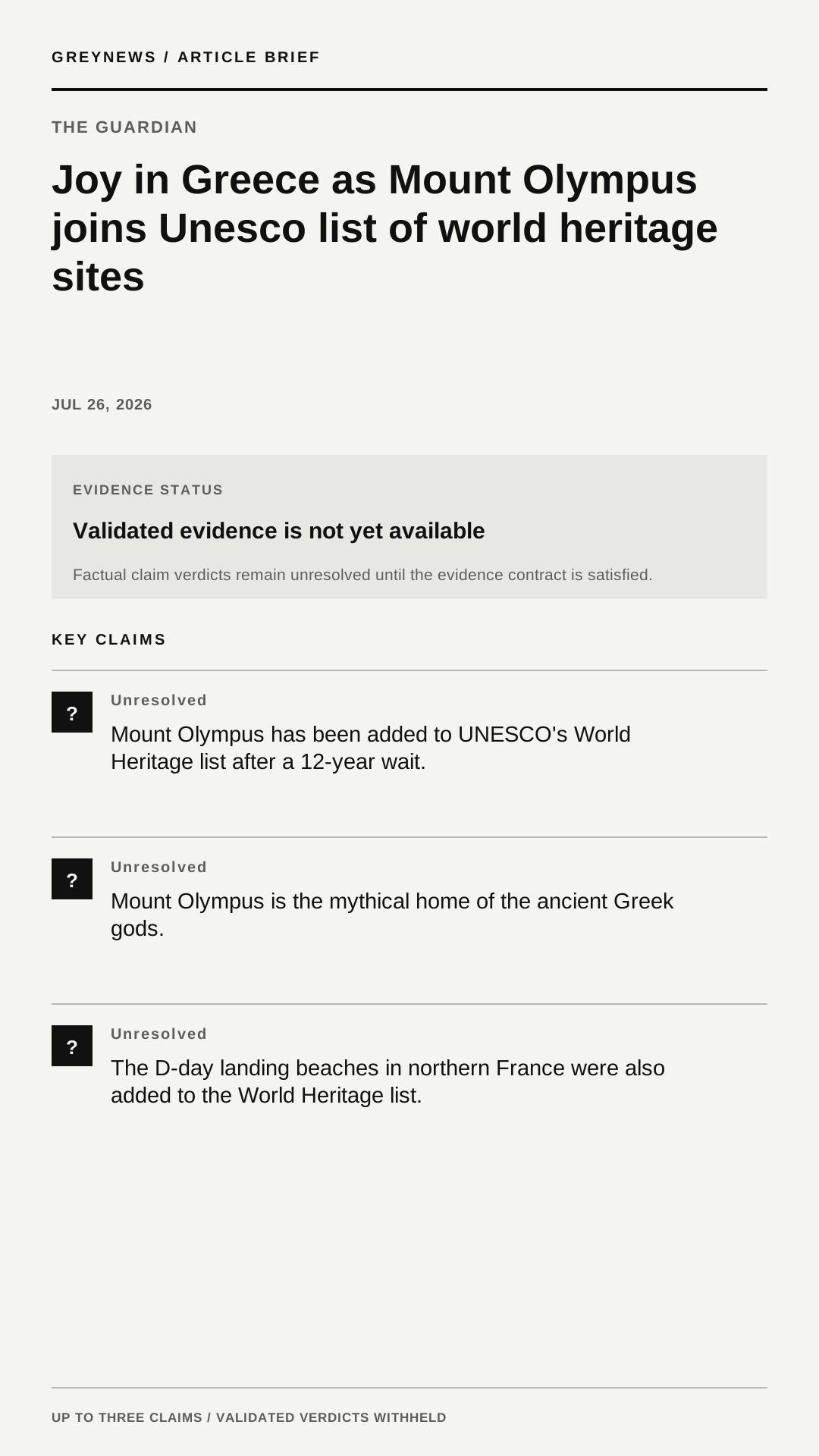
Mount Olympus is described as the mythical home of the ancient Greek gods.
The D-day landing beaches in northern France were also added to the World Heritage list.
6 claims still need verification.
No forecast extracted yet.
6 unresolved.
Key findings
Mount Olympus has been added to UNESCO's World Heritage list after a 12-year wait.
The Guardian- Mount Olympus is described as the mythical home of the ancient Greek gods.
- Greece waited 12 years for this Unesco designation.
Plain English
Loaded language removed<p>Mythical home of the ancient Greek gods designated alongside the D-day landing beaches in Normandy</p><p>After a 12-year wait, Mount Olympus, the mythical home of the ancient Greek gods, has been inducted into a hall of more modern fame as Unesco announced it would be added to its world heritage list.</p><p>Greece’s highest mountain made the list alongside the second world war D-day landing beaches in northern France and the ancient Japanese capitals of Asuka and Fujiwara.
Emotionally neutral rewrite. Same facts, calmer framing.
What's next
This angle has contested claims
Claims
Mount Olympus has been added to UNESCO's World Heritage list after a 12-year wait.
The GuardianMount Olympus is the mythical home of the ancient Greek gods.
The GuardianThe D-day landing beaches in northern France were also added to the World Heritage list.
The GuardianThe ancient Japanese capitals of Asuka and Fujiwara were added to the World Heritage list.
The GuardianSouth Sudan's Boma-Badingilo landscape received its first UNESCO designation.
The GuardianBoma-Badingilo hosts one of the world's largest land mammal migrations.
The Guardian