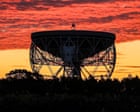
World-class Jodrell Bank is under threat and UK risks a physics brain drain
The News
The article highlights a funding crisis threatening the world-class Jodrell Bank Observatory, which could lead to a brain drain in UK physics. It recounts the history of Jodrell Bank, starting with Bernard Lovell's radio astronomy work in 1945 and the completion of the Lovell telescope in 1957, which tracked Sputnik. The potential loss of such a facility would be a significant blow to British science and economic growth.
Infographic
The Analysis
Intelligence Brief
Analyzed
Same as the summary above — this brief adds the distinct fields below.
Founded in 1945 by Bernard Lovell.
The Lovell telescope at Jodrell Bank was completed in 1957, just in time to track the Sputnik satellite.
4 claims still need verification.
No forecast extracted yet.
4 unresolved.
Key findings
The funding crisis could lead to an exodus of physicists, harming British science and national growth.
Prediction- Founded in 1945 by Bernard Lovell.
- Key discovery of radio reflections from meteor trails.
Plain English
Loaded language removed<p>Funding crisis could lead to an exodus that would be a blow for British science and national growth</p><p>On a chilly day in December 1945, Bernard Lovell, a physicist at the University of Manchester, struck out for the Cheshire countryside to study cosmic rays, the streams of high-energy particles that crisscross the universe.
Emotionally neutral rewrite. Same facts, calmer framing.
What's next
This angle has contested claims
Claims
The funding crisis could lead to an exodus of physicists, harming British science and national growth.
PredictionIn December 1945, physicist Bernard Lovell began studying cosmic rays at Jodrell Bank, which marked the birth of radio astronomy there.
The GuardianThe Lovell telescope at Jodrell Bank was completed in 1957, just in time to track the Sputnik satellite.
The GuardianAt the time of its completion, the Lovell telescope was the largest radio telescope in the world.
The Guardian