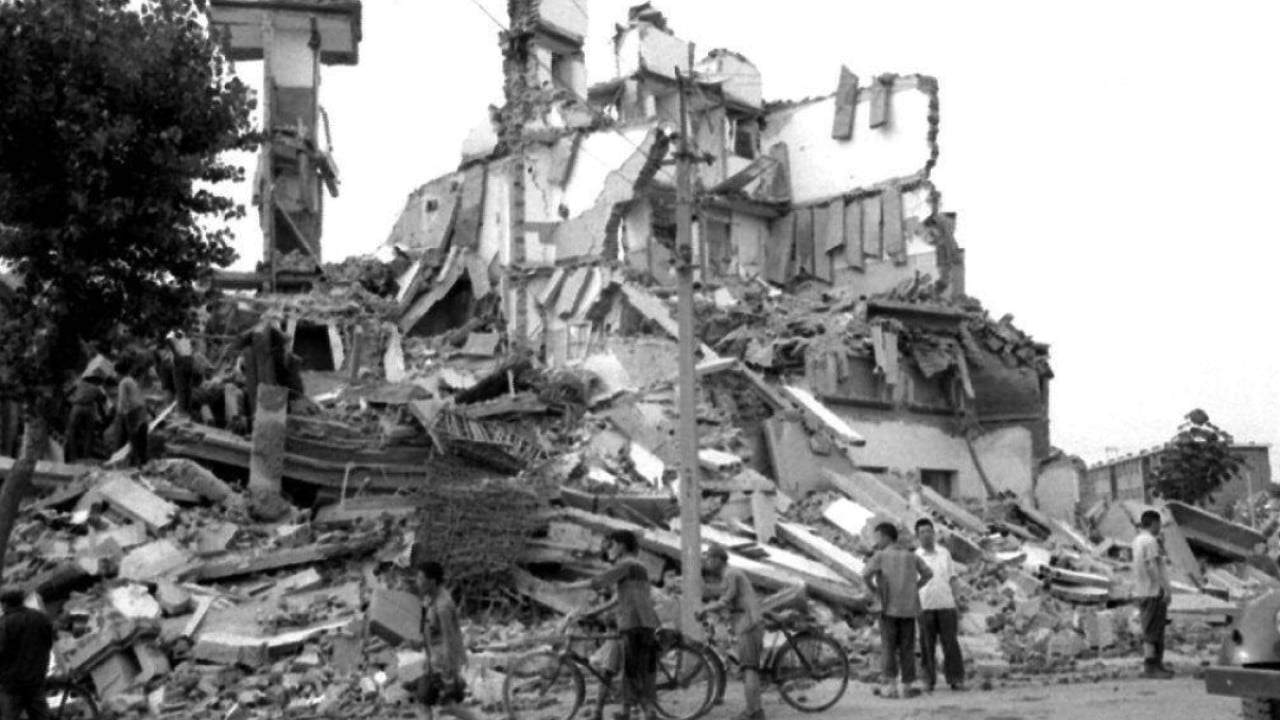
In 1976, earthquake in China’s Tangshan kills over 240,000 people – SCMP archive
The News
On July 28, 1976, a powerful earthquake struck the industrial belt of northern Hopei Province (now Hebei), China, near Tangshan. It was the strongest earthquake in 12 years and was followed by a series of aftershocks, including a major one 16 hours later of almost the same intensity. The earthquake caused heavy casualties and severe damage to industrial plants and property. The disaster ultimately killed over 240,000 people, making it one of the deadliest earthquakes in history.
Infographic

The Analysis
Intelligence Brief
Analyzed
Same as the summary above — this brief adds the distinct fields below.
Severe damage to industrial plants is reported.
The earthquake was followed by a series of aftershocks.
4 claims still need verification.
No forecast extracted yet.
4 unresolved.
Key findings
Heavy casualties and severe damage to industrial plants and property were feared.
South China Morning Post- Heavy casualties are feared, implying many dead and injured.
- Aftershocks cause further damage, increasing social instability.
Plain English
Loaded language removedThis article was first published on July 29, 1976. Quake rocks Northern China by Staff Reporters Heavy casualties and severe damage to industrial plants and property were feared when the strongest earthquake for 12 years struck the industrial belt of northern Hopei Province early yesterday (July 28, 1976) morning.
Emotionally neutral rewrite. Same facts, calmer framing.
What's next
This angle has contested claims
Claims
Heavy casualties and severe damage to industrial plants and property were feared.
South China Morning PostThe strongest earthquake for 12 years struck the industrial belt of northern Hopei Province early on July 28, 1976.
South China Morning PostThe earthquake was followed by a series of aftershocks.
South China Morning PostAn aftershock of almost the same intensity struck the same area 16 hours after the first quake.
South China Morning Post