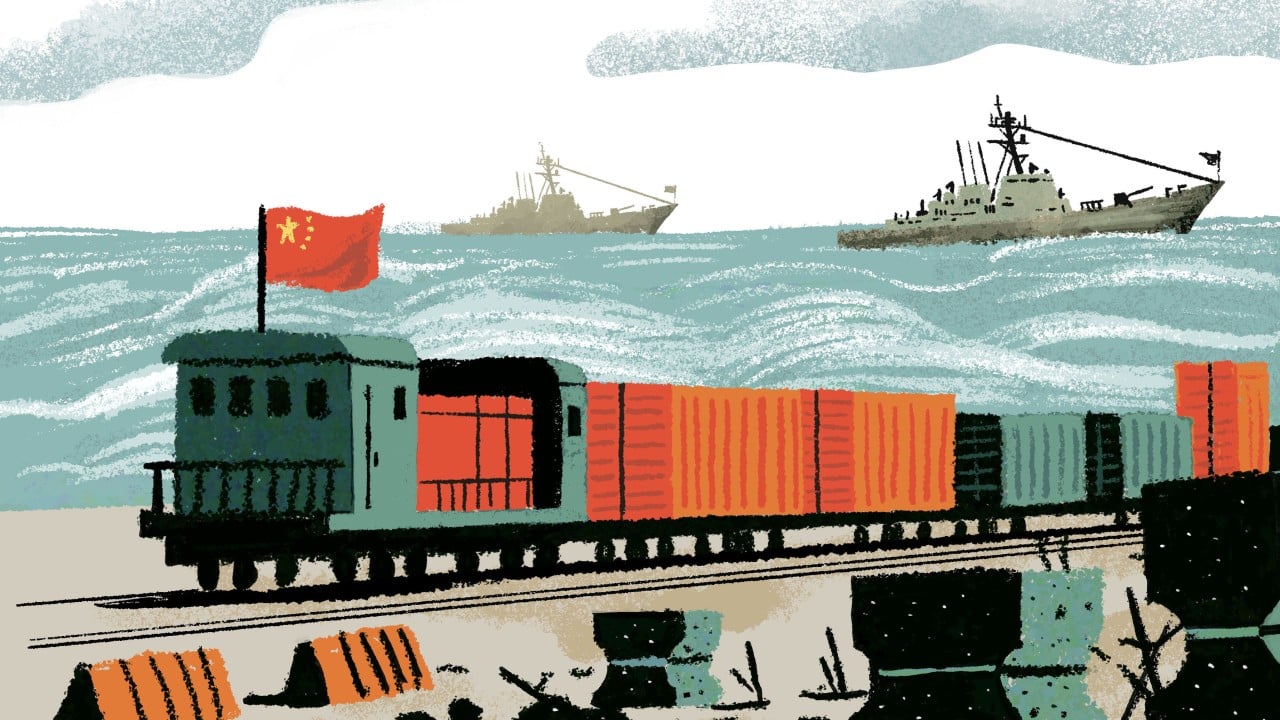
China tests Central Asian land corridors to bypass maritime chokepoints
The News
China is testing overland trade routes across Central Asia to reduce reliance on maritime chokepoints like the Strait of Hormuz. A new link to Afghanistan via Uzbekistan was launched in May with pilot shipments. However, analysts note that security concerns and capacity constraints could make a significant shift away from sea freight difficult.
Infographic
The Analysis
Intelligence Brief
Analyzed
Same as the summary above — this brief adds the distinct fields below.
Bypass Strait of Hormuz and other chokepoints
Beijing is doubling down on overland trade routes across Central Asia.
5 claims still need verification.
No forecast extracted yet.
5 unresolved.
Key findings
Observers caution that security concerns and capacity constraints could make a meaningful shift away from sea freight difficult.
South China Morning Post- Bypass Strait of Hormuz and other chokepoints
- Central Asian corridors as alternative
Plain English
Loaded language removedBeijing is doubling down on overland trade routes across Central Asia as continued disruptions in the Strait of Hormuz and the wider region expose the vulnerability of global shipping chokepoints. A new link to Afghanistan via Uzbekistan offers a practical example of this long-term diversification push.
Emotionally neutral rewrite. Same facts, calmer framing.
What's next
This angle has contested claims
Claims
Observers caution that security concerns and capacity constraints could make a meaningful shift away from sea freight difficult.
South China Morning PostBeijing is doubling down on overland trade routes across Central Asia.
South China Morning PostContinued disruptions in the Strait of Hormuz and the wider region expose the vulnerability of global shipping chokepoints.
South China Morning PostA new link to Afghanistan via Uzbekistan offers a practical example of this long-term diversification push.
South China Morning PostOfficially launched in May with pilot shipments.
South China Morning Post