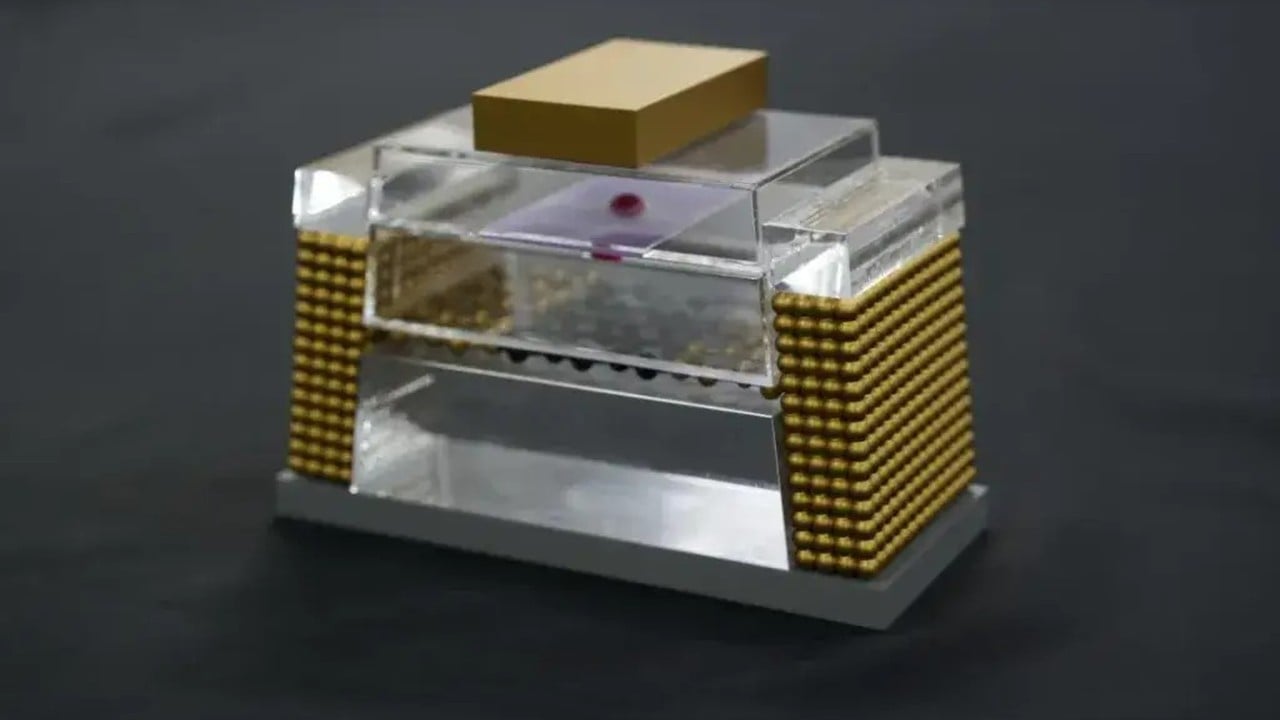
China’s new chip stores data with a single electron, breaking AI memory bottleneck
The News
A team at Fudan University in Shanghai, led by microelectronics professor Zhou Peng, has developed a new chip that stores a single bit of information using just one electron, a dramatic reduction from the 200,000 electrons used in current DRAM chips from Samsung and SK Hynix. The breakthrough, published in Science on July 16, could potentially overcome the memory bottleneck in AI systems by drastically reducing power consumption and increasing storage density.
Infographic

The Analysis
Intelligence Brief
Analyzed
Same as the summary above — this brief adds the distinct fields below.
Reduces electrons per bit from 200,000 to one.
The paper was published on July 16 in Science.
4 claims still need verification.
No forecast extracted yet.
4 unresolved.
Key findings
Today’s most advanced DRAM chips from Samsung and SK Hynix use roughly 200,000 electrons to store a single bit.
South China Morning Post- Reduces electrons per bit from 200,000 to one.
- Published by microelectronics professor Zhou Peng in Science on July 16.
Plain English
Loaded language removedHow many electrons does it take to store a single bit of information? For today’s most advanced dynamic random access memory (DRAM) chips from Samsung and SK Hynix, the answer is roughly 200,000. That is the price of reliability – a vast reservoir of charge needed to ensure a “1” or “0” does not fade into noise.
Emotionally neutral rewrite. Same facts, calmer framing.
What's next
This angle has contested claims
Claims
Today’s most advanced DRAM chips from Samsung and SK Hynix use roughly 200,000 electrons to store a single bit.
South China Morning PostA team at Fudan University in Shanghai has achieved storing a single bit using one electron.
South China Morning PostThe paper was published on July 16 in Science.
South China Morning PostThe lead researcher is microelectronics professor Zhou Peng at Fudan University.
South China Morning Post