
Japan’s deadliest fault line shifts, frustrating megaquake forecasts
The News
A Japanese study has found that the locked zone in the Nankai Trough changes over time, rather than being permanent. This discovery complicates efforts to predict megaquakes along the 900km-long fault line off Japan's Pacific coast, where the Philippine plate subducts under the Eurasian plate. The finding highlights the dynamic nature of seismic zones and challenges existing forecasting models, which is crucial for disaster preparedness in Japan.
Infographic
The Analysis
Intelligence Brief
Analyzed
Same as the summary above — this brief adds the distinct fields below.
A Japanese study found the locked zone in the Nankai Trough is not permanent but changes over time.
The Philippine plate is slipping under the Eurasian plate at the Nankai Trough.
6 claims still need verification.
No forecast extracted yet.
6 unresolved.
Key findings
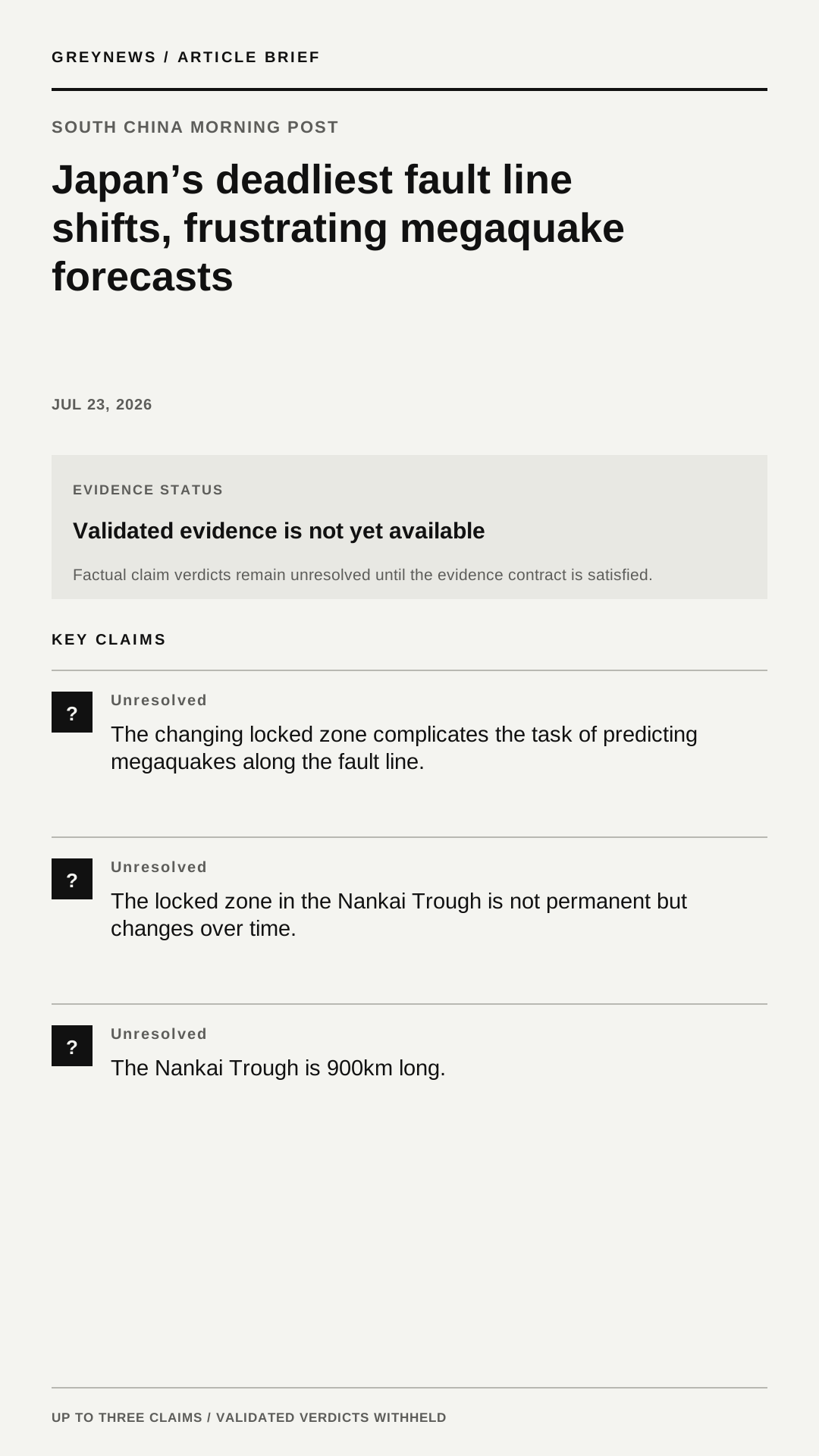
The changing locked zone complicates the task of predicting megaquakes along the fault line.
South China Morning Post- A Japanese study found the locked zone in the Nankai Trough is not permanent but changes over time.
- The locked zone is where tectonic plates merge and stress builds up until an earthquake.
Plain English
Loaded language removedA Japanese study has found that the locked zone in the Nankai Trough is not permanent but changes over time, further challenging the task of predicting megaquakes along the fault line.
Emotionally neutral rewrite. Same facts, calmer framing.
What's next
This angle has contested claims
Claims
The changing locked zone complicates the task of predicting megaquakes along the fault line.
South China Morning PostThe locked zone in the Nankai Trough is not permanent but changes over time.
South China Morning PostThe Nankai Trough is 900km long.
South China Morning PostThe Nankai Trough is off Japan’s Pacific coast.
South China Morning PostThe Philippine plate meets the Eurasian plate at the Nankai Trough.
South China Morning PostThe Philippine plate is slipping under the Eurasian plate at the Nankai Trough.
South China Morning Post