
Indonesia’s AI copyright push opens new front in war over digital content
The News
Indonesia is rewriting its copyright law to address artificial intelligence, sparking a conflict between news publishers seeking compensation and technology companies warning against overreach. The debate centers on who gets paid when AI uses copyrighted works and how much human involvement is required for AI-assisted output to gain legal protection. The House of Representatives recently commented on the issue. This matters because it could set a precedent for AI and digital content regulation.
Infographic
The Analysis
Intelligence Brief
Analyzed
Same as the summary above — this brief adds the distinct fields below.
Redefining copyright for AI-assisted works
At stake is who gets paid when AI systems and digital platforms use copyrighted works.
7 claims still need verification.
No forecast extracted yet.
7 unresolved.
Key findings
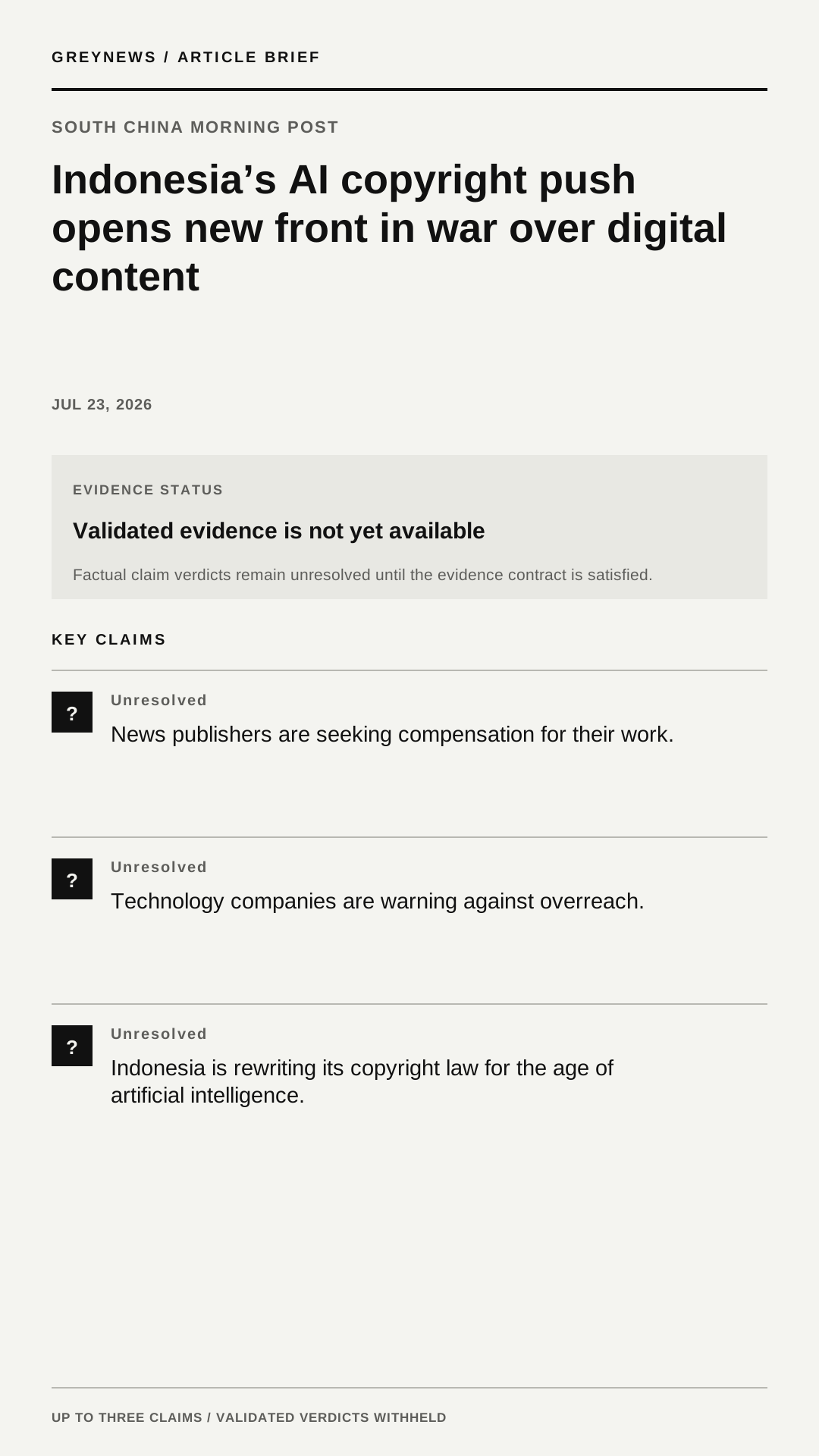
News publishers are seeking compensation for their work.
South China Morning Post- Redefining copyright for AI-assisted works
- Threshold of human involvement for legal protection
Plain English
Loaded language removedIndonesia’s push to rewrite its copyright law for the age of artificial intelligence has added a new dimension to the dispute between news publishers seeking compensation for their work and technology companies warning against excessive regulation.
Emotionally neutral rewrite. Same facts, calmer framing.
What's next
This angle has contested claims
Claims
News publishers are seeking compensation for their work.
South China Morning PostTechnology companies are warning against overreach.
South China Morning PostIndonesia is rewriting its copyright law for the age of artificial intelligence.
South China Morning PostThe rewrite has opened a new front in a battle between news publishers and technology companies.
South China Morning PostAt stake is who gets paid when AI systems and digital platforms use copyrighted works.
South China Morning PostAt stake is how much human involvement is needed before AI-assisted output qualifies for legal protection.
South China Morning PostThe House of Representatives made a statement on the issue last week.
South China Morning Post