
Trump’s latest tariffs put UK at disadvantage to the EU, say experts
The News
Donald Trump's latest tariffs reduce the EU's blanket tariff from 15% to 10%, matching the UK's current rate under a previous deal. However, experts say UK businesses in sectors not covered by that deal now face tougher competition, putting them at a disadvantage relative to EU rivals. The tariffs are reportedly aimed at countries engaging in forced labour. The development highlights ongoing trade tensions and the uneven impact of US trade policy on allies.
Infographic
The Analysis
Intelligence Brief
Analyzed
Same as the summary above — this brief adds the distinct fields below.
UK businesses face tougher competition in sectors not covered by Turnberry deal
The 10% tariff level is the same as the tariff deal struck by Keir Starmer and Peter Mandelson last year.
6 claims still need verification.
No forecast extracted yet.
6 unresolved.
Key findings
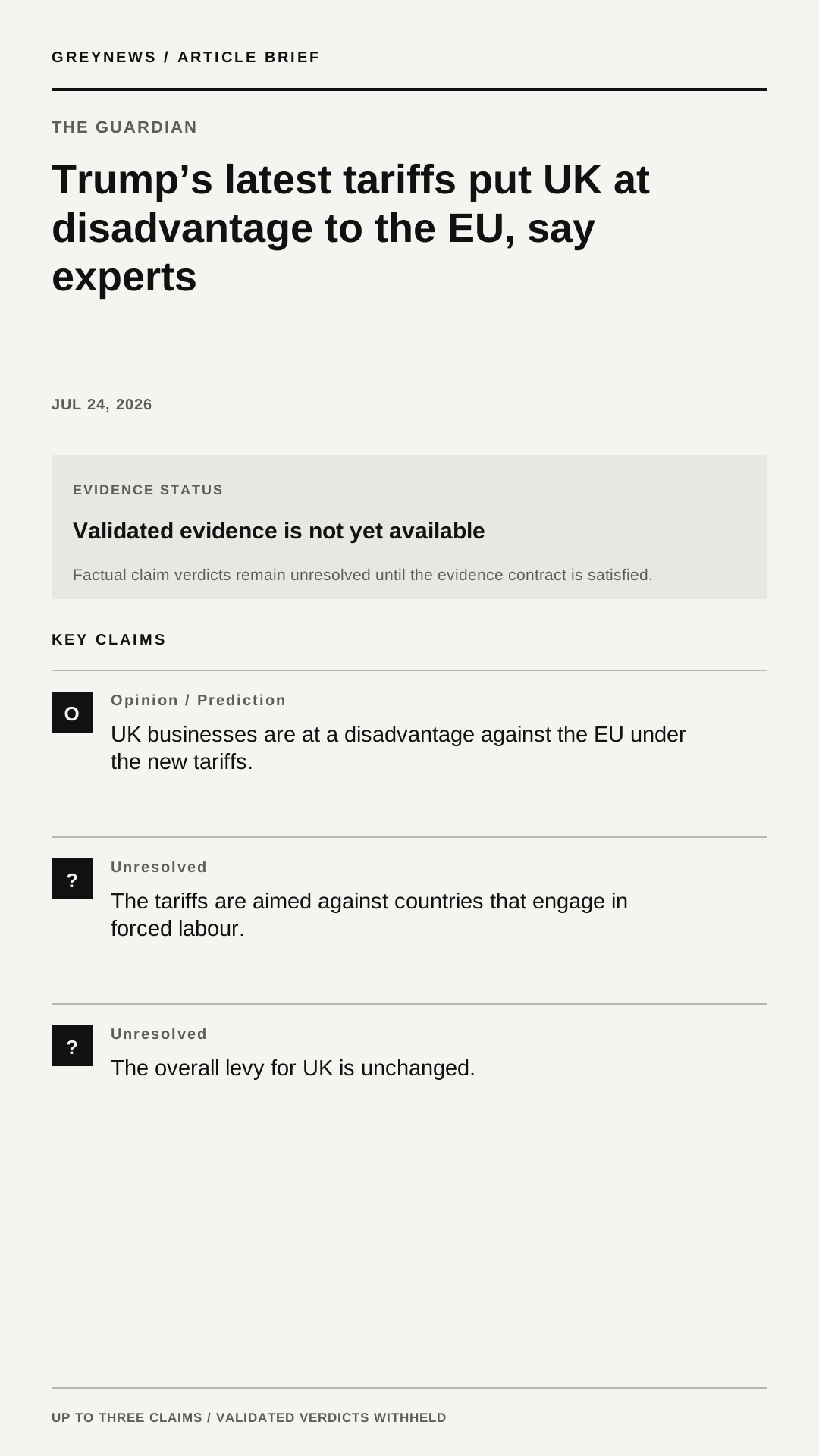
UK businesses are at a disadvantage against the EU under the new tariffs.
Opinion- UK businesses face tougher competition in sectors not covered by Turnberry deal
- EU tariff reduction to 10% matches UK's deal, removing previous advantage
Plain English
Loaded language removed<p>While overall levy for UK is unchanged, sectors not covered by Turnberry deal face tougher competition</p><p>Donald Trump’s latest round of tariffs has put UK businesses at a disadvantage against the EU even though the overall tariff for London has not changed, experts have said.</p><p>In the levies, announced late on Thursday and said to be aimed against countries that engage in forced…
Emotionally neutral rewrite. Same facts, calmer framing.
What's next
This angle has contested claims
Claims
UK businesses are at a disadvantage against the EU under the new tariffs.
OpinionThe tariffs are aimed against countries that engage in forced labour.
The GuardianThe overall levy for UK is unchanged.
The GuardianThe EU’s previous 15% near blanket tariff is reduced to 10%.
The GuardianThe 10% tariff level is the same as the tariff deal struck by Keir Starmer and Peter Mandelson last year.
The GuardianSectors not covered by the Turnberry deal face tougher competition.
The Guardian