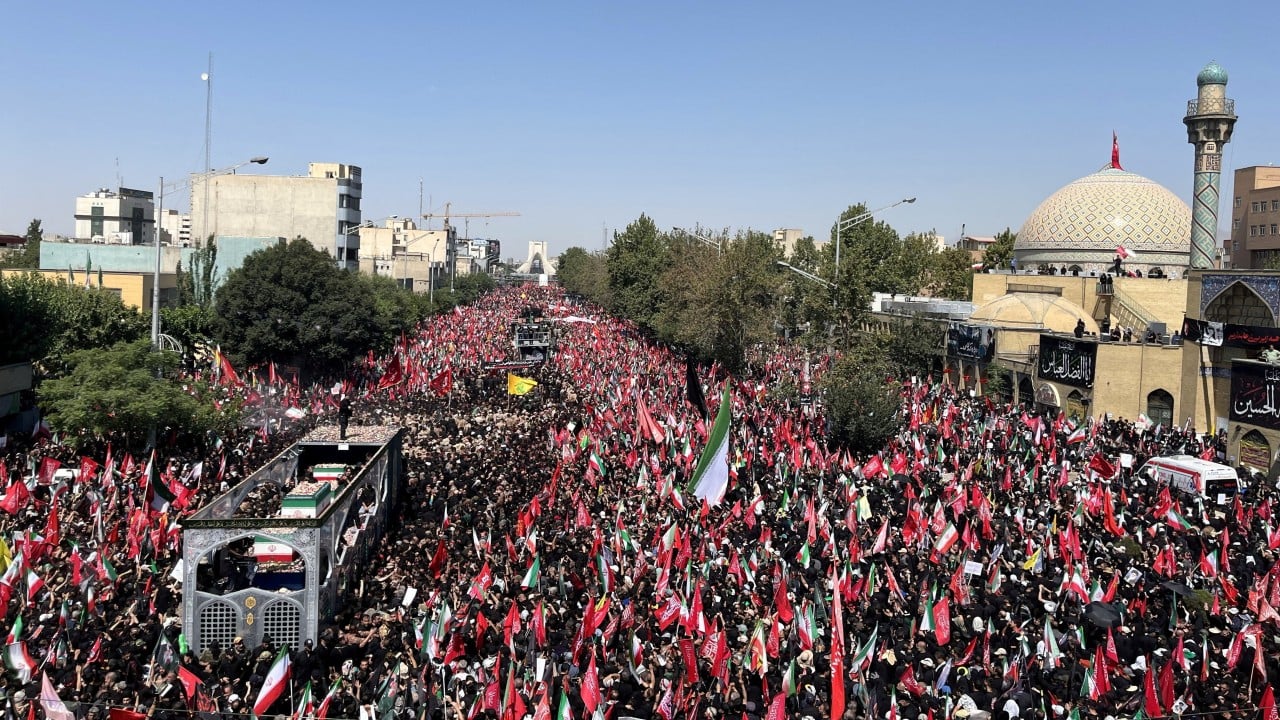
Crowds fill Tehran as funeral procession begins for Iran’s slain supreme leader Khamenei
The News
The funeral procession for Iran's late supreme leader Ali Khamenei began in Tehran on Monday, as reported by state television. Authorities prepared for large crowds potentially comparable to those at the funeral of Ayatollah Khomeini in 1989. The event is viewed as a chance for Iran to demonstrate resilience following conflicts with the US and Israel. Attention is on successor Mojtaba Khamenei, who has not appeared publicly since assuming power.
Infographic
No infographic was generated for this story. GreyNews is not leaving this spinning indefinitely.
The Analysis
Intelligence Brief
Analyzed · High confidence (80%)
Same as the summary above — this brief adds the distinct fields below.
Projection of resilience amid external conflicts
The funeral procession for Iran's late supreme leader Ali Khamenei began in Tehran on Monday.
5 claims still need verification.
No forecast extracted yet.
Key findings
The ceremonies offer Iran an opportunity to project resilience after war with the United States and Israel.
Opinion- Projection of resilience amid external conflicts
- Funeral as geopolitical messaging
Trust Breakdown
Plain English
Loaded language removedThe funeral procession for Iran’s late supreme leader Ali Khamenei began in Tehran on Monday, state television reported, as authorities prepared for crowds that could rival those that turned out for his predecessor nearly four decades ago.
Emotionally neutral rewrite. Same facts, calmer framing.
What's next
This angle has contested claims
Claims
The ceremonies offer Iran an opportunity to project resilience after war with the United States and Israel.
OpinionThe funeral procession for Iran's late supreme leader Ali Khamenei began in Tehran on Monday.
South China Morning PostAuthorities prepared for crowds that could rival those that turned out for Khamenei's predecessor nearly four decades ago.
PredictionAttention remains focused on Khamenei's successor, his son Mojtaba Khamenei.
South China Morning PostMojtaba Khamenei has not appeared in public since taking power.
South China Morning Post