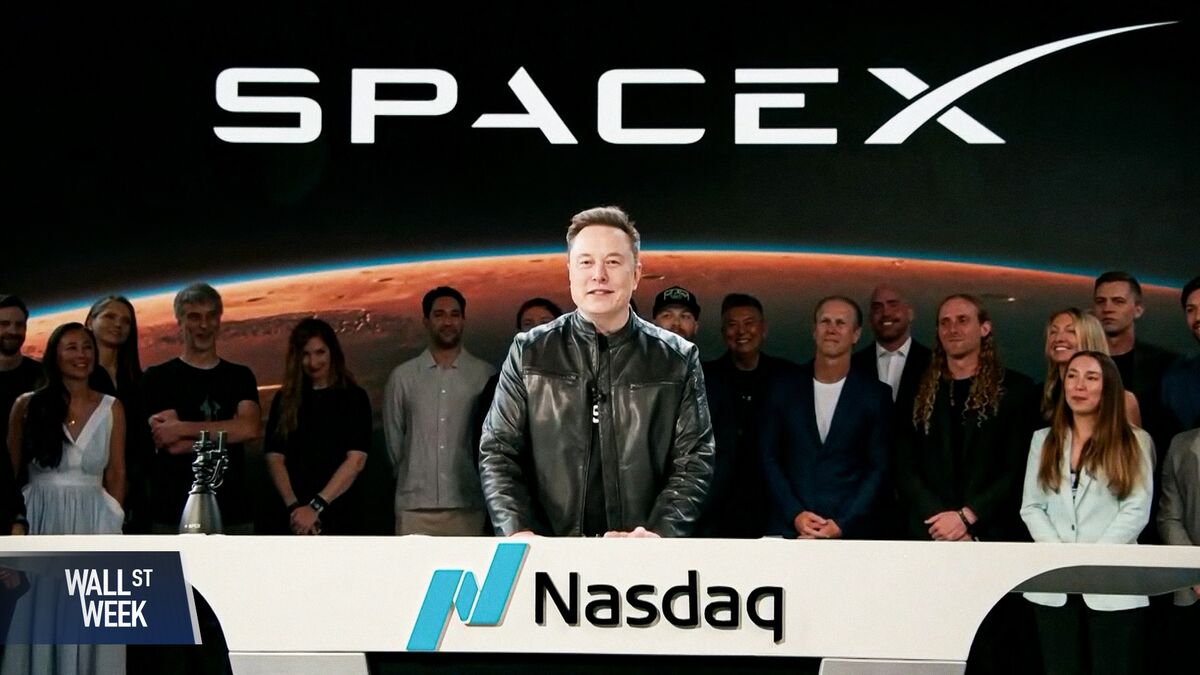
How Founder Control Is Reshaping Public Markets
The News
SpaceX's initial public offering introduced dual-class shares, allowing CEO Elon Musk to control over 80% of voting rights despite holding just over 40% of equity. The structure has drawn both support from IPO advisers who say it protects founders from short-term pressure, and criticism from governance experts who warn of risks to accountability and shareholder value. Some investors, including Danish pension fund AkademikerPension, have rejected the stock over concerns of catastrophic governance. The IPO serves as a test case for how much control public markets will accept from high-profile founders.
Media lane unavailable
Media lane unavailable — generated audio/video could not be loaded. GreyNews is not treating missing generated media as still generating.
The Analysis
Intelligence Brief
Analyzed · High confidence (85%)
SpaceX's initial public offering introduced dual-class shares, allowing CEO Elon Musk to control over 80% of voting rights despite holding just over 40% of equity. The structure has drawn both support from IPO advisers who say it protects founders from short-term pressure, and criticism from governance experts who warn of risks to accountability and shareholder value. Some investors, including Danish pension fund AkademikerPension, have rejected the stock over concerns of catastrophic governanc...
Dual-class shares concentrate economic control in founders, potentially reducing shareholder value.
CEO Elon Musk holds just over 40% of the company's equity.
6 claims still need verification.
No forecast extracted yet.
Key findings
IPO adviser Lise Buyer says dual-class shares can protect founders from short-term market pressure.
Opinion- Dual-class shares concentrate economic control in founders, potentially reducing shareholder value.
- SpaceX's structure gives Musk 80% voting power with 40% equity.
Trust Breakdown
Plain English
Loaded language removedSpaceX’s notable IPO gave public investors access to one of the world’s most valuable companies, but not equal voting rights. CEO Elon Musk holds just over 40% of the company’s equity while controlling more than 80% of the vote.
Emotionally neutral rewrite. Same facts, calmer framing.
What's next
This angle has contested claims
Claims
IPO adviser Lise Buyer says dual-class shares can protect founders from short-term market pressure.
OpinionHarvard Law School’s Lucian Bebchuk warns that SpaceX’s structure raises risks around accountability, succession, conflicts of interest, and shareholder value.
OpinionSpaceX is a test case for how much control public markets are willing to give superstar founders.
PredictionSpaceX had a record-setting IPO.
BloombergCEO Elon Musk holds just over 40% of the company's equity.
BloombergElon Musk controls more than 80% of the vote.
Bloomberg