
Telling Hong Kong judge to retire early is sufficient penalty for plagiarism: experts
The News
A Hong Kong judge found to have plagiarized submissions in his judgments is being told to retire early as a penalty. Legal experts have stated that this penalty is sufficient, noting that the judge has already suffered reputational damage and is losing tens of millions of dollars in salary, allowances, and pension payouts. The case raises questions about judicial accountability and the handling of misconduct in Hong Kong's legal system.
Infographic
The Analysis
Intelligence Brief
Analyzed
Same as the summary above — this brief adds the distinct fields below.
Hong Kong judge found to have plagiarised submissions in judgments
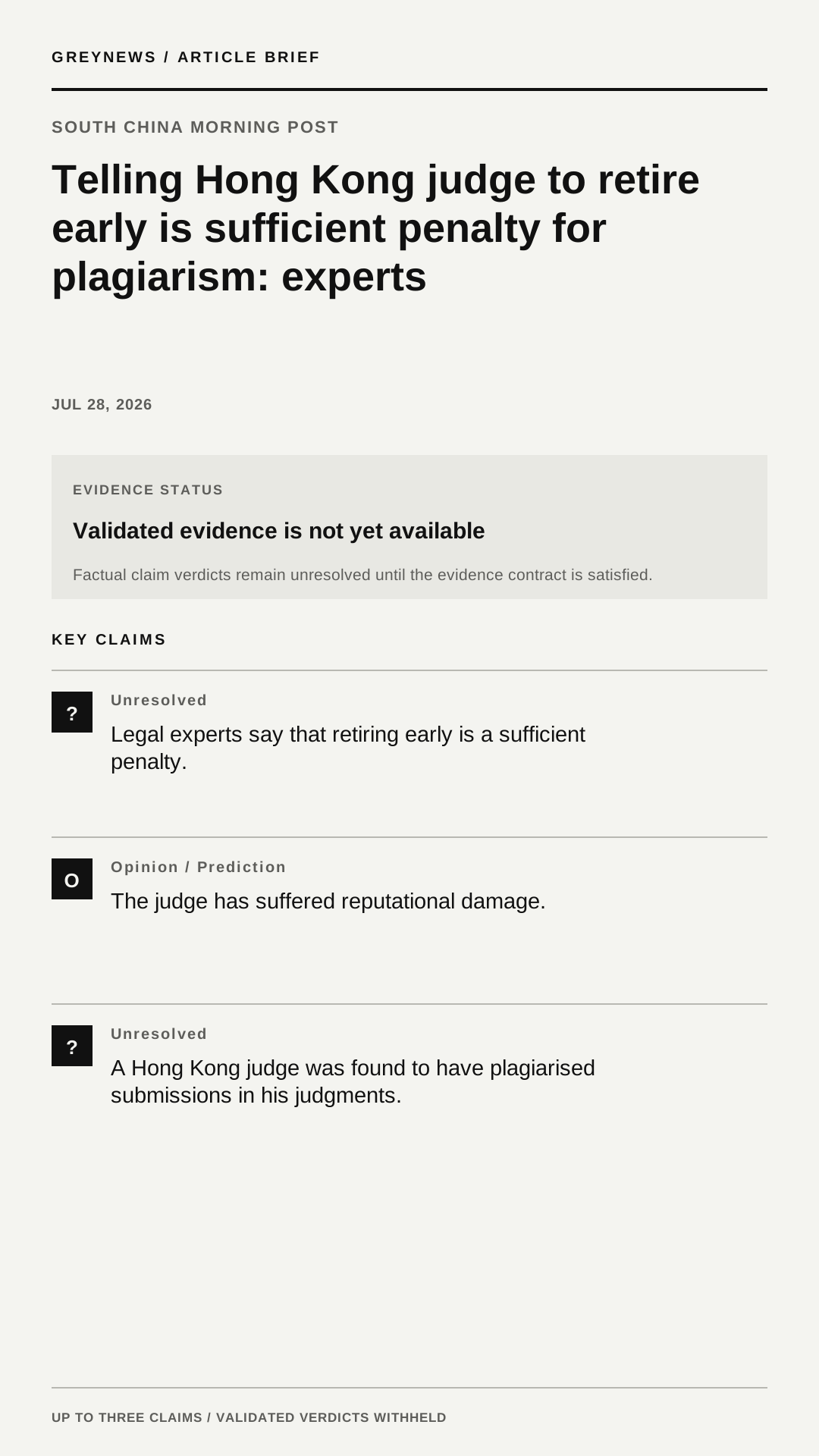
Legal experts say that retiring early is a sufficient penalty.
5 claims still need verification.
No forecast extracted yet.
5 unresolved.
Key findings
Legal experts say that retiring early is a sufficient penalty.
South China Morning Post- Hong Kong judge found to have plagiarised submissions in judgments
- Forced to retire early as penalty
Plain English
Loaded language removedTelling a Hong Kong judge found to have plagiarised submissions in his judgments to retire early is a sufficient penalty, as he has already suffered reputational damage and is losing tens of millions of dollars in forgone salary, allowances and pension payouts, legal experts have said.
Emotionally neutral rewrite. Same facts, calmer framing.
What's next
This angle has contested claims
Claims
Legal experts say that retiring early is a sufficient penalty.
South China Morning PostThe judge has suffered reputational damage.
OpinionA Hong Kong judge was found to have plagiarised submissions in his judgments.
South China Morning PostThe judge is being told to retire early as a penalty for plagiarism.
South China Morning PostThe judge is losing tens of millions of dollars in forgone salary, allowances, and pension payouts.
South China Morning Post