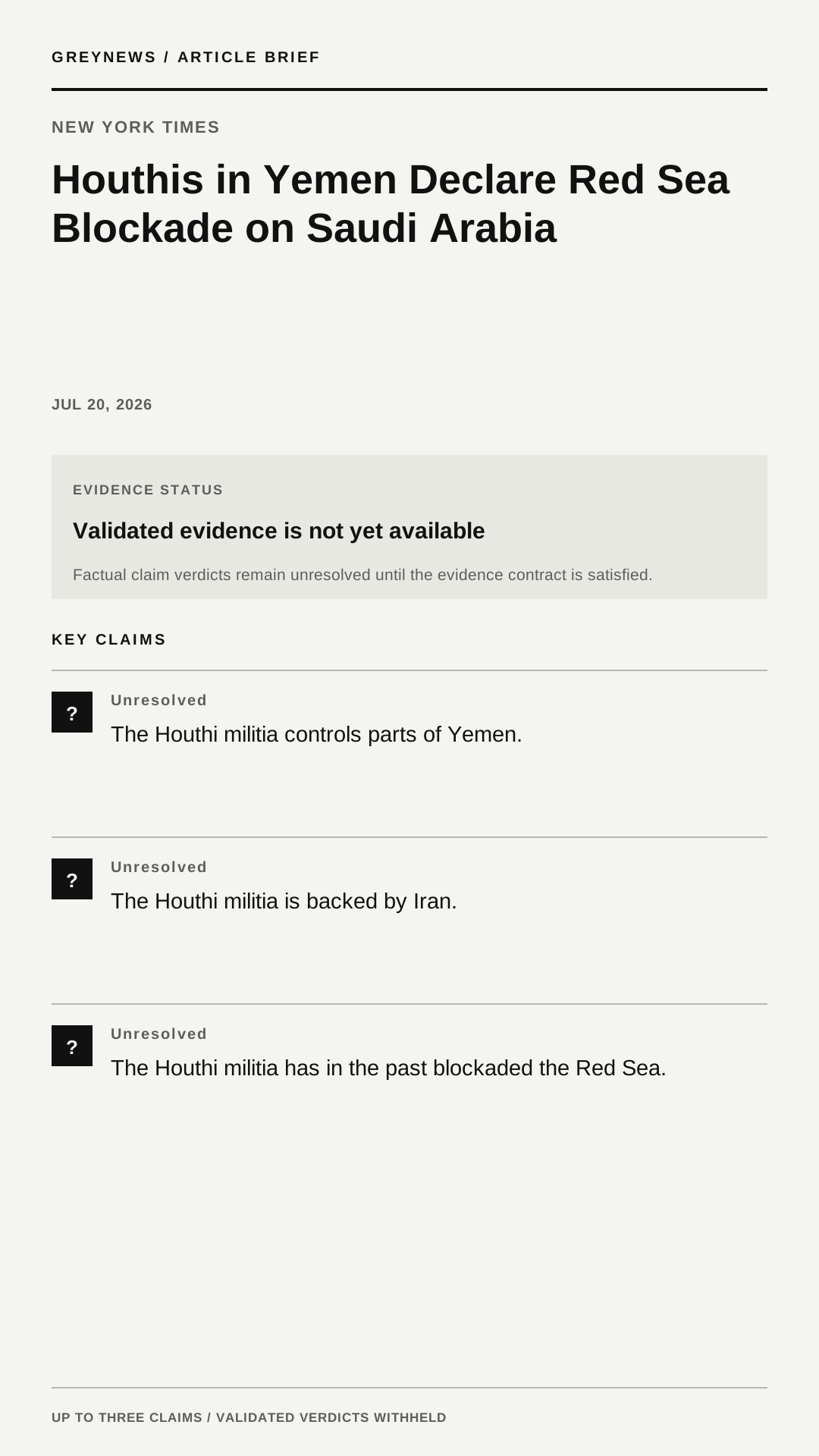
Houthis in Yemen Declare Red Sea Blockade on Saudi Arabia
The News
The Iran-backed Houthi militia, which controls parts of Yemen, has declared a Red Sea blockade on Saudi Arabia. The group has historically threatened a strategic choke point critical to Saudi oil exports and global shipping. This action could disrupt a major maritime route and affect global oil supplies.
Infographic
The Analysis
Intelligence Brief
Analyzed
Same as the summary above — this brief adds the distinct fields below.
Blockade threatens Saudi oil exports.
The Houthi militia controls parts of Yemen.
6 claims still need verification.
No forecast extracted yet.
6 unresolved.
Key findings
The Houthi militia controls parts of Yemen.
New York Times- Blockade threatens maritime security.
- Choke point is strategically important.
Plain English
Loaded language removedThe Iran-backed Houthi militia, which controls parts of Yemen, has in the past blockaded the Red Sea by threatening a choke point crucial to Saudi oil exports and global shipping.
Emotionally neutral rewrite. Same facts, calmer framing.
What's next
This angle has contested claims
Claims
The Houthi militia controls parts of Yemen.
New York TimesThe Houthi militia is backed by Iran.
New York TimesThe Houthi militia has in the past blockaded the Red Sea.
New York TimesThe blockade involved threatening a choke point.
New York TimesThe choke point is crucial to Saudi oil exports.
New York TimesThe choke point is crucial to global shipping.
New York Times