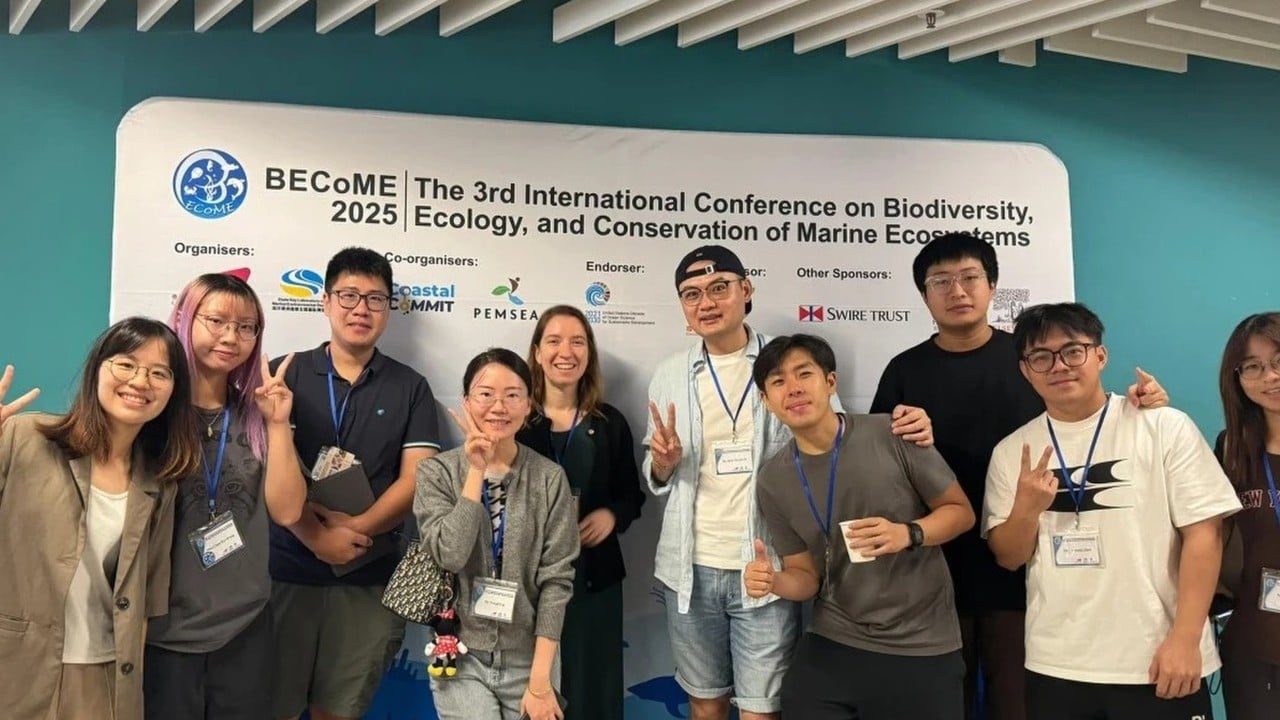
New DNA tracking helps spot rare ‘Tai O fish’ in Hong Kong waters after 10 years
The News
A Hong Kong academic used environmental DNA technology to detect the critically endangered Chinese bahaba, also known as the Tai O fish, in local waters for the first time in over a decade. The study was co-led by Jack Ip Chi-ho of Lingnan University and Wang Junjie of South China Normal University. The researchers developed a genetic identification method to trace the fish's DNA. This discovery is significant because the species had not been detected in Hong Kong for many years, highlighting the potential of eDNA for conservation monitoring.
Infographic
The Analysis
Intelligence Brief
Analyzed
A Hong Kong academic used environmental DNA technology to detect the critically endangered Chinese bahaba, also known as the Tai O fish, in local waters for the first time in over a decade. The study was co-led by Jack Ip Chi-ho of Lingnan University and Wang Junjie of South China Normal University. The researchers developed a genetic identification method to trace the fish's DNA. This discovery is significant because the species had not been detected in Hong Kong for many years, highlighting t...
Potential for eco-tourism related to the rare fish species.
Jack Ip Chi-ho is an assistant professor at Lingnan University’s division of science.
5 claims still need verification.
No forecast extracted yet.
5 unresolved.
Key findings
Environmental DNA technology was used to detect the Chinese bahaba (Tai O fish) in Hong Kong waters for the first time in more than a decade.
South China Morning Post- Potential for eco-tourism related to the rare fish species.
- Could affect local fishing industries if conservation zones are expanded.
Plain English
Loaded language removedA Hong Kong academic has used environmental DNA technology to detect the critically endangered Chinese bahaba – commonly known as the “Tai O fish” – in local waters for the first time in more than a decade. Jack Ip Chi-ho, an assistant professor at Lingnan University’s division of science, co-led the study with Wang Junjie, a professor at South China Normal University in mainland China.
Emotionally neutral rewrite. Same facts, calmer framing.
What's next
This angle has contested claims
Claims
Environmental DNA technology was used to detect the Chinese bahaba (Tai O fish) in Hong Kong waters for the first time in more than a decade.
South China Morning PostJack Ip Chi-ho is an assistant professor at Lingnan University’s division of science.
South China Morning PostWang Junjie is a professor at South China Normal University.
South China Morning PostThe study was co-led by Jack Ip Chi-ho and Wang Junjie.
South China Morning PostThe researchers developed a genetic identification method to detect traces of Chinese bahaba DNA.
South China Morning Post