
Racy short story by Alan Turing offers glimpse of ‘playful, funny, cheeky’ side
The News
A short story written by Alan Turing in the year after his arrest for gross indecency has been transcribed and studied by Cambridge professor Sarah Dillon. Dillon argues that the story reveals a playful, funny, and cheeky side of Turing, challenging the common perception of him as isolated and humourless. This new insight into Turing's personality offers a more nuanced view of the father of modern computing beyond his scientific legacy.
Infographic
The Analysis
Intelligence Brief
Analyzed
Same as the summary above — this brief adds the distinct fields below.
Challenges the 'isolated mathematician' stereotype.
Sarah Dillon transcribed and studied the short story.
3 claims still need verification.
No forecast extracted yet.
3 unresolved.
Key findings
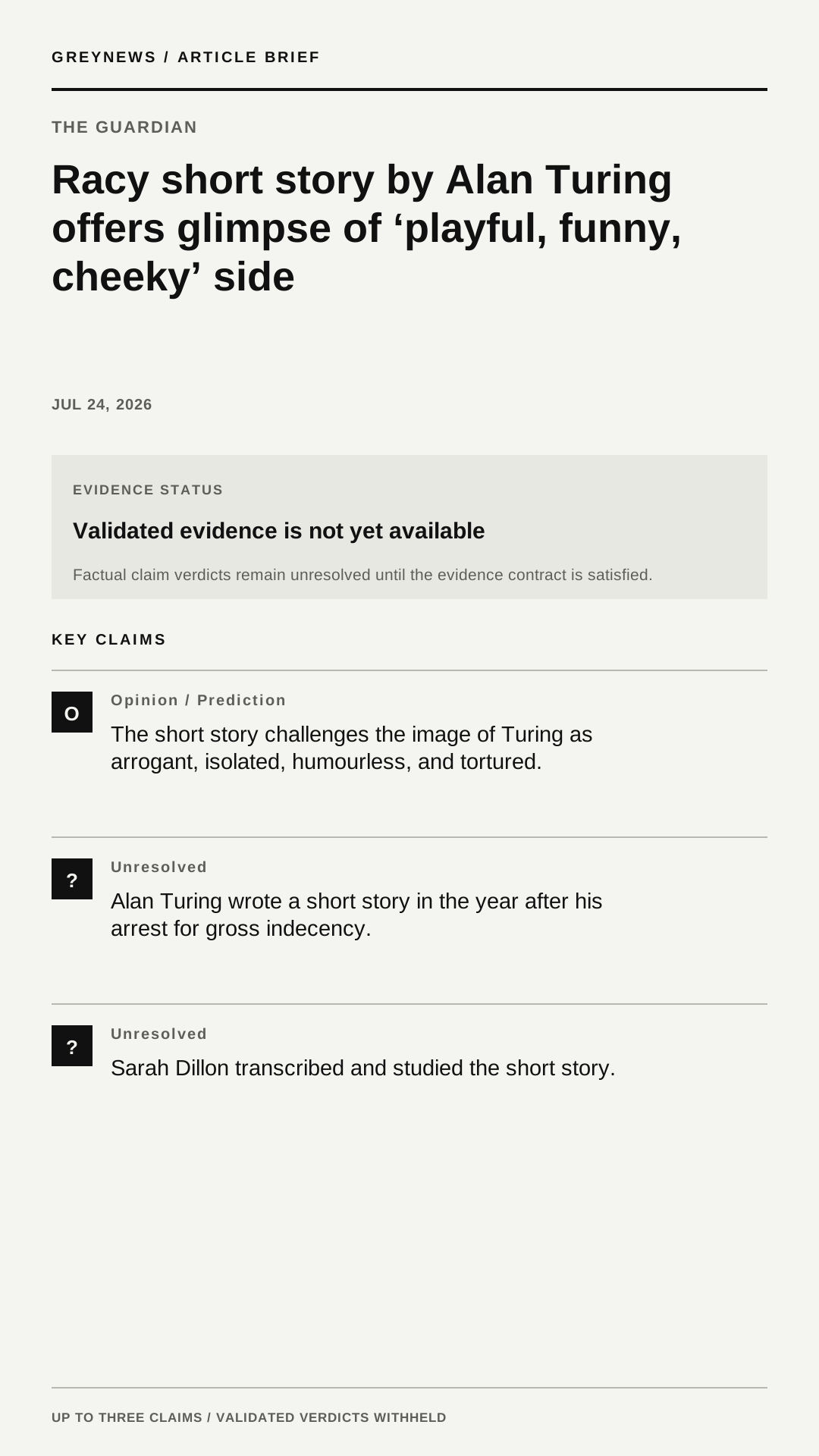
The short story challenges the image of Turing as arrogant, isolated, humourless, and tortured.
Opinion- Challenges the 'isolated mathematician' stereotype.
- Portrays Turing's sexuality as part of his normal, happy life.
Plain English
Loaded language removed<p>Writing from year after gross indecency arrest challenges ‘isolated mathematician’ image, says Cambridge academic</p><p>When people think of Alan Turing, they might imagine he was arrogant, isolated, humourless, tortured.
Emotionally neutral rewrite. Same facts, calmer framing.
What's next
This angle has contested claims
Claims
The short story challenges the image of Turing as arrogant, isolated, humourless, and tortured.
OpinionAlan Turing wrote a short story in the year after his arrest for gross indecency.
The GuardianSarah Dillon transcribed and studied the short story.
The Guardian