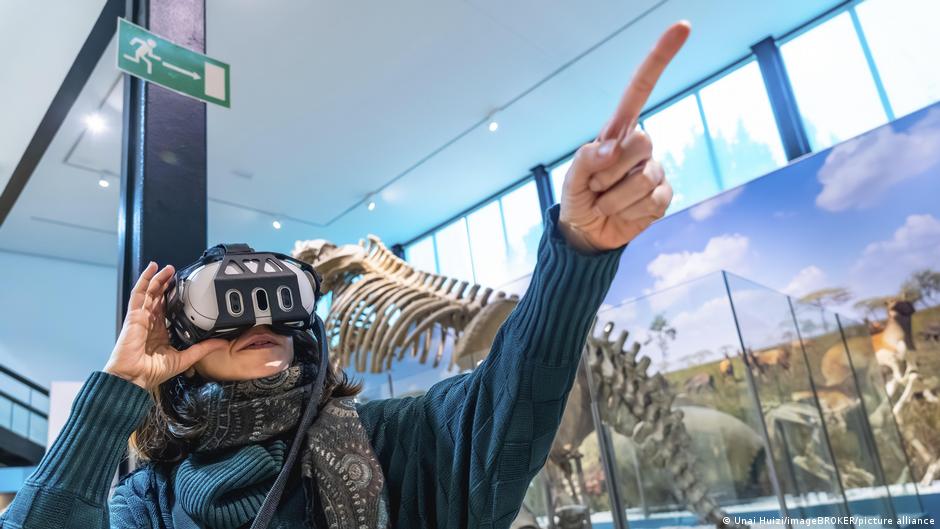
Can VR help you achieve your goals?
The News
A Max Planck researcher has developed virtual reality and smartphone tools that allow users to interact with a representation of their future self. The article suggests that the underlying science is more impactful than it may initially appear. This innovation could potentially help individuals achieve personal goals by providing a tangible connection to their future selves.
Infographic
The Analysis
Intelligence Brief
Analyzed
Same as the summary above — this brief adds the distinct fields below.
Research conducted by a Max Planck researcher.
A Max Planck researcher has developed VR and smartphone tools.
2 claims still need verification.
No forecast extracted yet.
2 unresolved.
Key findings
The science behind the tools is more powerful than it sounds.
Opinion- Research conducted by a Max Planck researcher.
- Tools include VR and smartphone apps.
Plain English
Loaded language removedA Max Planck researcher has developed VR and smartphone tools that let you "meet" your future self. The science behind it is more powerful than it sounds.
Emotionally neutral rewrite. Same facts, calmer framing.
What's next
This angle has contested claims
Claims
The science behind the tools is more powerful than it sounds.
OpinionA Max Planck researcher has developed VR and smartphone tools.
Deutsche Welle