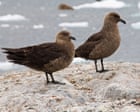
Fears for New Zealand’s native species as first bird flu case emerges
The News
The H5N1 bird flu virus has been detected for the first time in New Zealand, in a brown skua found on Petone beach in Wellington on July 10. Biosecurity Minister Andrew Hoggard confirmed the positive test and urged the public to report sightings of three or more sick or dead birds. Officials fear that if the virus spreads, it could devastate vulnerable native bird species. The case raises concerns for New Zealand's unique avian wildlife.
Infographic
No infographic was generated for this story. GreyNews is not leaving this spinning indefinitely.
The Analysis
Intelligence Brief
Analyzed · High confidence (78%)
Same as the summary above — this brief adds the distinct fields below.
First confirmed H5N1 case in New Zealand wildlife.
A single brown skua tested positive for H5N1 on Wednesday, after being found on Petone beach in Wellington on 10 July.
6 claims still need verification.
No forecast extracted yet.
Key findings
Biosecurity Minister Andrew Hoggard urged the public to report cases of three or more sick or dead birds in a group.
Opinion- First confirmed H5N1 case in New Zealand wildlife.
- Brown skua seabird tested positive.
Trust Breakdown
Plain English
Loaded language removed<p>Minister urges public to report cases of three or more sick or dead birds in a group after brown skua seabird tests positive for H5N1 on Wellington beach</p><p>The deadly H5N1 bird flu has been confirmed in New Zealand for the first time, sparking alarm that some of the country’s most beloved and vulnerable native birds could be wiped out if it spreads.</p><p>A single ocean-going seabird, a…
Emotionally neutral rewrite. Same facts, calmer framing.
What's next
This angle has contested claims
Claims
Biosecurity Minister Andrew Hoggard urged the public to report cases of three or more sick or dead birds in a group.
OpinionSome of New Zealand's most beloved and vulnerable native birds could be wiped out if the virus spreads.
PredictionA single brown skua tested positive for H5N1 on Wednesday, after being found on Petone beach in Wellington on 10 July.
The GuardianThe biosecurity minister is Andrew Hoggard.
The GuardianThe brown skua was found on 10 July 2026.
The GuardianH5N1 bird flu has been confirmed in New Zealand for the first time.
The GuardianBias & Framing
- fear_amplification: sparking alarm that some of the country’s most beloved and vulnerable native birds could be wiped out,The deadly H5N1 bird flu