Footprints in Kenya shed light on prehistoric human cousin Paranthropus
The News
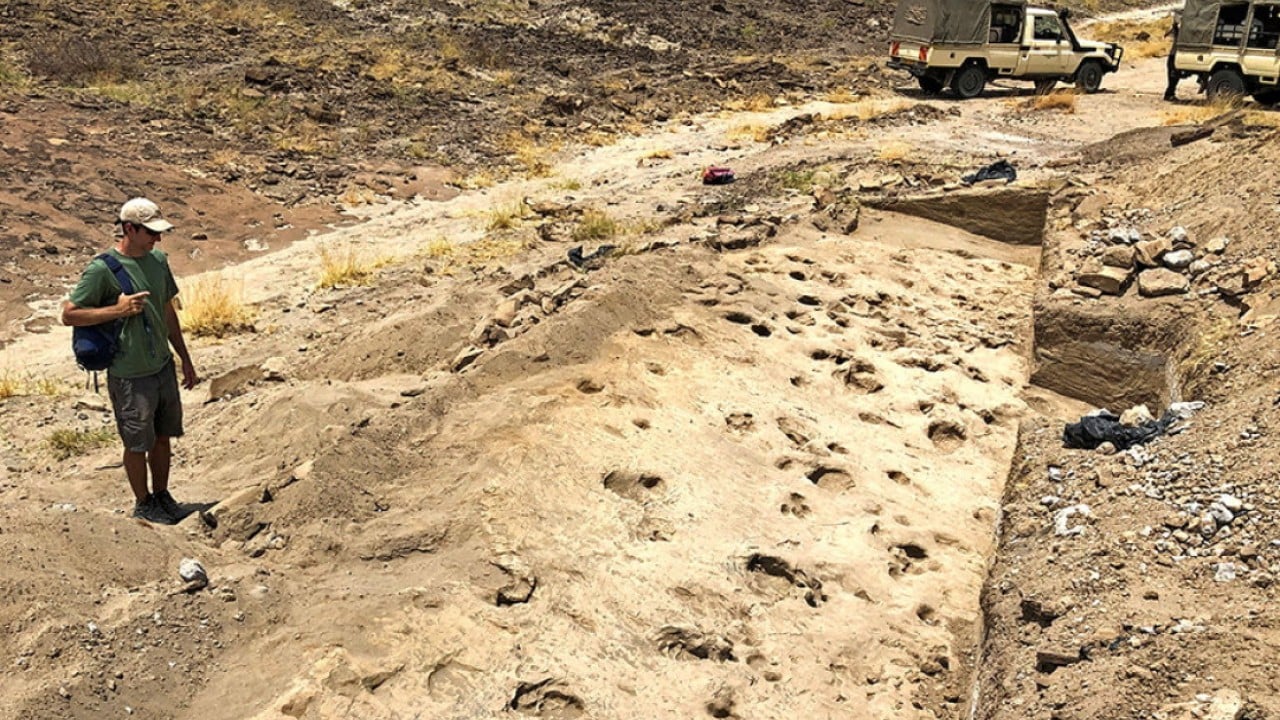
Researchers have identified 21 footprints from 1.43 million years ago in northern Kenya, attributed to the species Paranthropus boisei. The footprints offer new insights into the size and behavior of this hominid, which was adapted to eating tough vegetation. Paranthropus boisei is the last known species of its kind in the human evolutionary lineage and is typically studied from skull and tooth fossils. This discovery provides rare evidence of its locomotion and social behavior.
Infographic
The Analysis
Intelligence Brief
Analyzed
Same as the summary above — this brief adds the distinct fields below.
Footprints dated to around 1.43 million years ago
Paranthropus boisei is known mostly from skull and tooth fossils.
5 claims still need verification.
No forecast extracted yet.
5 unresolved.
Key findings
The footprints provide new insight into the size and behavior of Paranthropus boisei.
South China Morning Post- Footprints dated to around 1.43 million years ago
- Found on eastern side of Lake Turkana, Kenya
Plain English
Loaded language removedFootprints left on a muddy lakeshore in northern Kenya around 1.43 million years ago are providing new insight into the size and behaviour of a species in the human evolutionary lineage that was the last of its kind, known for extensive anatomical adaptations for eating tough vegetation. The species, Paranthropus boisei, is known mostly from skull and tooth fossils.
Emotionally neutral rewrite. Same facts, calmer framing.
What's next
This angle has contested claims
Claims
The footprints provide new insight into the size and behavior of Paranthropus boisei.
South China Morning PostParanthropus boisei is the last of its kind in the human evolutionary lineage.
South China Morning PostParanthropus boisei is known for extensive anatomical adaptations for eating tough vegetation.
South China Morning PostParanthropus boisei is known mostly from skull and tooth fossils.
South China Morning PostResearchers identified 21 footprints made by eight individuals.
South China Morning Post