
Election voting advice from AI chatbots ‘inaccurate and unreliable’
The News
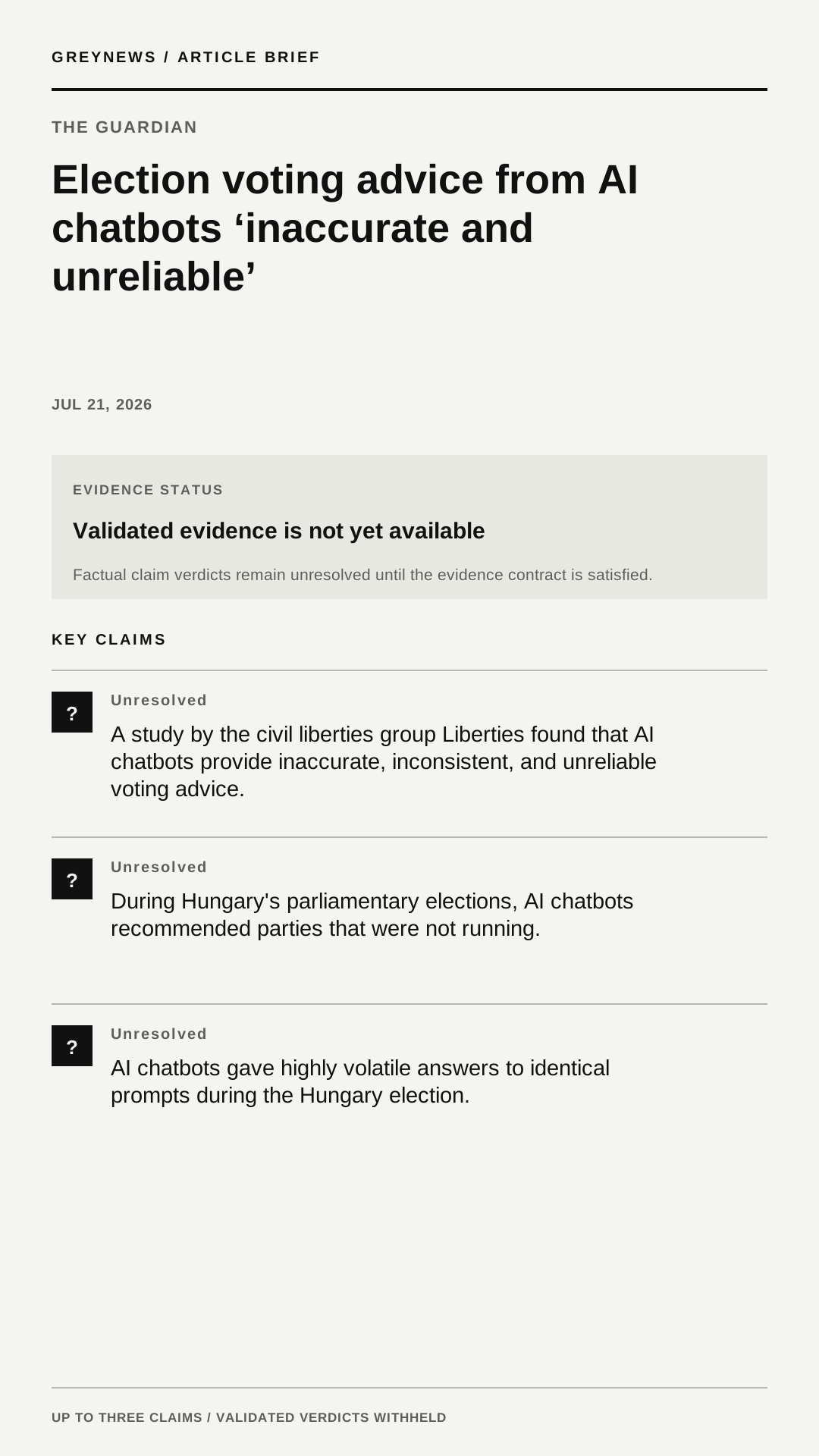
A study by the civil liberties group Liberties found that AI chatbots provide inaccurate, inconsistent, and unreliable voting advice, based on research during Hungary's parliamentary elections. The chatbots recommended parties that were not running and gave highly volatile responses to identical prompts. The findings raise concerns about using general-purpose AI systems for electoral guidance.
Infographic
The Analysis
Intelligence Brief
Analyzed
Same as the summary above — this brief adds the distinct fields below.
AI chatbots recommended parties not running in Hungarian elections
A study by the civil liberties group Liberties found that AI chatbots provide inaccurate, inconsistent, and unreliable voting advice.
3 claims still need verification.
No forecast extracted yet.
3 unresolved.
Key findings
A study by the civil liberties group Liberties found that AI chatbots provide inaccurate, inconsistent, and unreliable voting advice.
The Guardian- AI chatbots recommended parties not running in Hungarian elections
- AI gave highly volatile answers to identical prompts
Plain English
Loaded language removed<p>Research during Hungary election shows AI recommended parties not running and gave highly volatile answers to identical prompts</p><p>AI chatbots provide inaccurate, inconsistent and unreliable guidance to voters asking which party they should back, a study suggests, often recommending the wrong party, not mentioning the right one, or listing parties not even running.</p><p>“The results raise…
Emotionally neutral rewrite. Same facts, calmer framing.
What's next
This angle has contested claims
Claims
A study by the civil liberties group Liberties found that AI chatbots provide inaccurate, inconsistent, and unreliable voting advice.
The GuardianDuring Hungary's parliamentary elections, AI chatbots recommended parties that were not running.
The GuardianAI chatbots gave highly volatile answers to identical prompts during the Hungary election.
The Guardian