
Reproductive medicine laws in Germany 'shockingly unjust'
The News
The article reports that infertility affects one in six women in Germany, but access to reproductive medicine is limited because surrogacy and egg donation are banned. This highlights a perceived injustice in German laws.
Infographic
The Analysis
Intelligence Brief
Analyzed
Same as the summary above — this brief adds the distinct fields below.
Surrogacy and egg donation are specifically banned
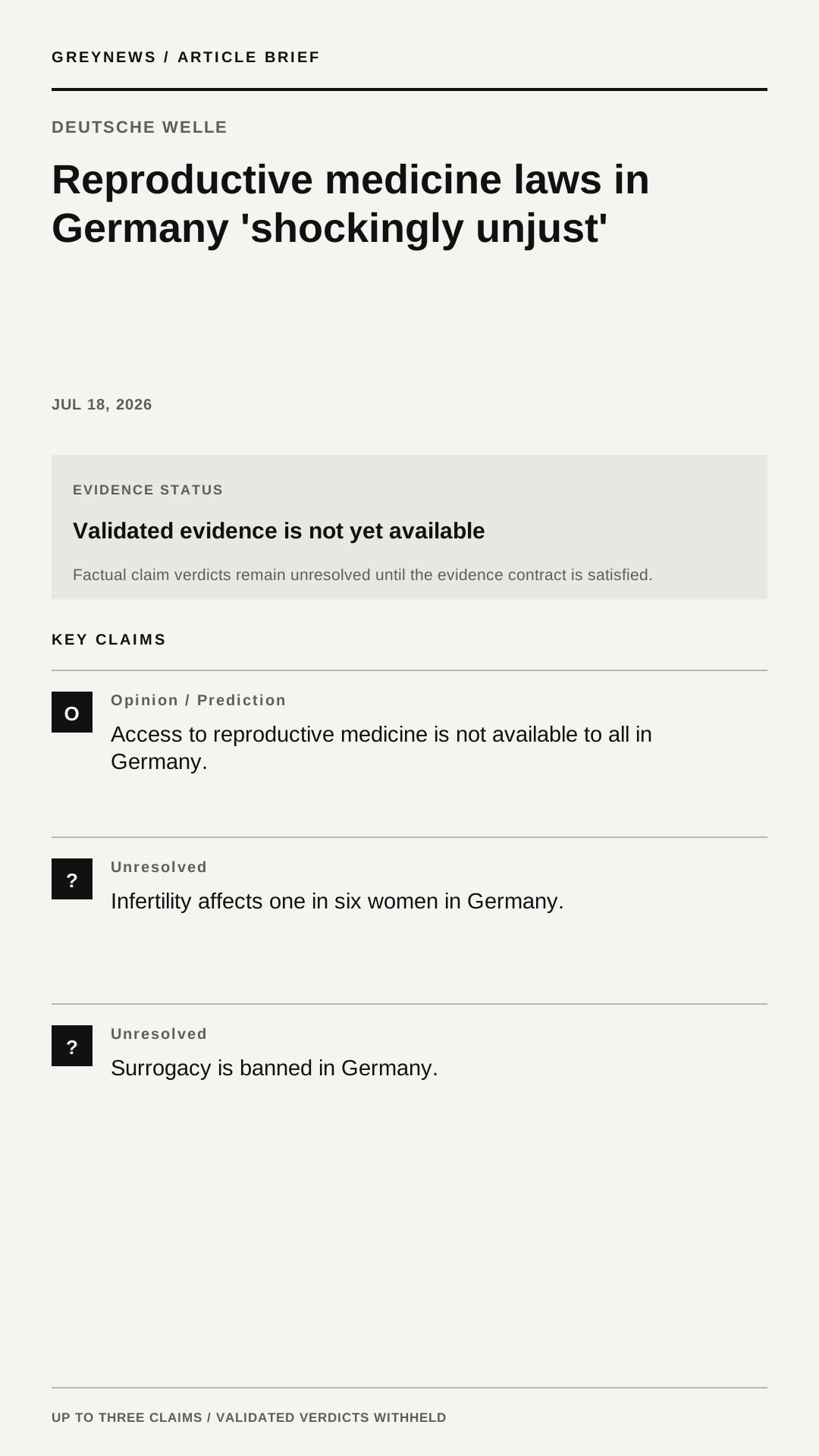
Surrogacy is banned in Germany.
4 claims still need verification.
No forecast extracted yet.
4 unresolved.
Key findings
Access to reproductive medicine is not available to all in Germany.
Opinion- Surrogacy and egg donation are specifically banned
- Laws may conflict with constitutional rights
Plain English
Loaded language removedInfertility affects one in six women in Germany. However, access to reproductive medicine is not available to all. Surrogacy as well as egg donation are banned.
Emotionally neutral rewrite. Same facts, calmer framing.
What's next
This angle has contested claims
Claims
Access to reproductive medicine is not available to all in Germany.
OpinionInfertility affects one in six women in Germany.
Deutsche WelleSurrogacy is banned in Germany.
Deutsche WelleEgg donation is banned in Germany.
Deutsche Welle