
Germany’s drive to compete with China collides with long-standing tradition of Sunday rest
The News
Germany is grappling with a conflict between its efforts to compete with Chinese imports and its longstanding tradition of Sunday rest. Policymakers and retailers are questioning whether the century-old practice remains suitable as the economy struggles to regain competitiveness. The debate highlights the tension between preserving cultural norms and adapting to economic pressures.
Infographic
The Analysis
Intelligence Brief
Analyzed
Same as the summary above — this brief adds the distinct fields below.
Competition with Chinese imports
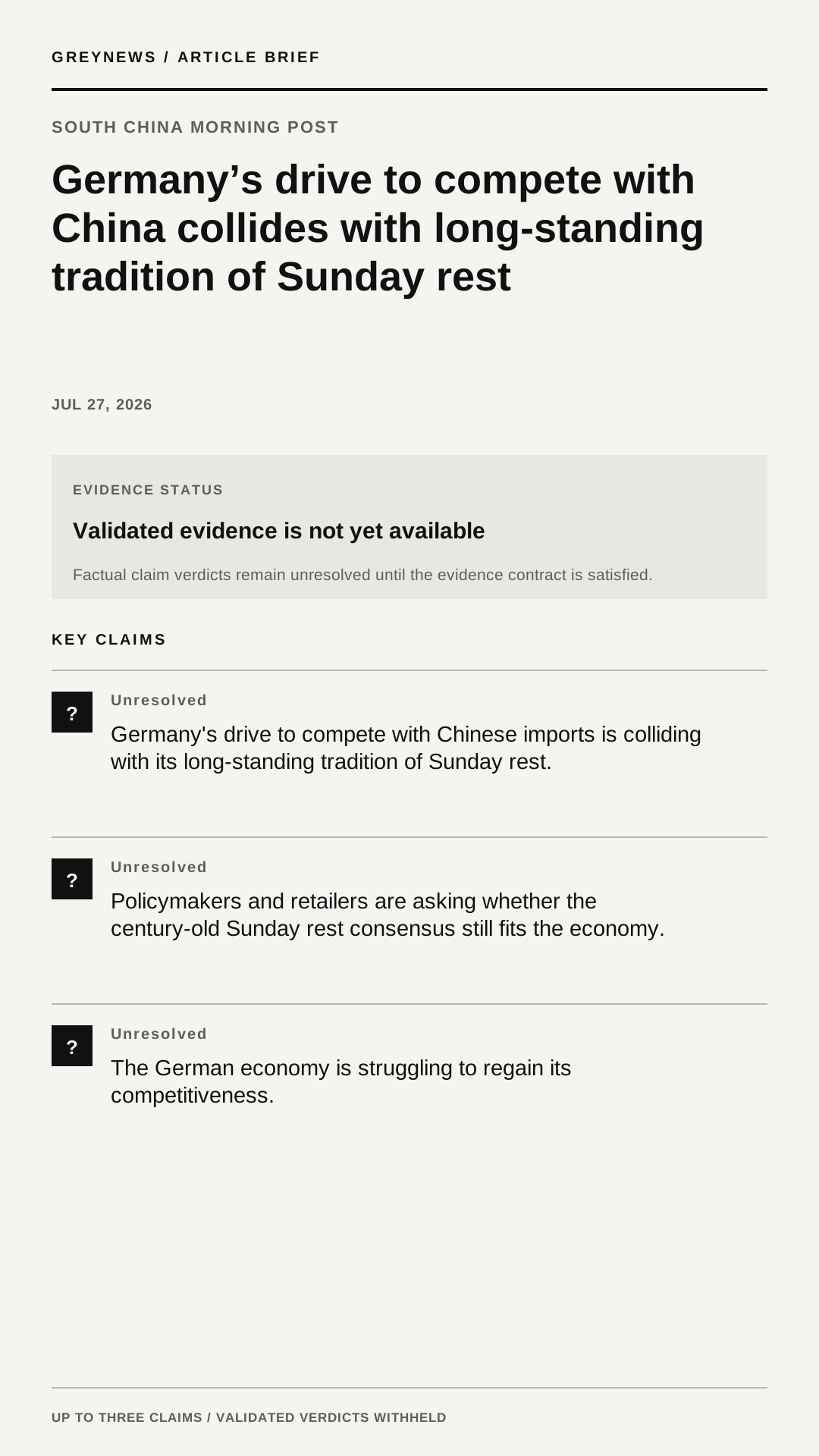
Germany's drive to compete with Chinese imports is colliding with its long-standing tradition of Sunday rest.
3 claims still need verification.
No forecast extracted yet.
3 unresolved.
Key findings
Germany's drive to compete with Chinese imports is colliding with its long-standing tradition of Sunday rest.
South China Morning Post- Competition with Chinese imports
- Economy struggling to regain competitiveness
Plain English
Loaded language removedGermany’s drive to compete with Chinese imports is colliding with its long-standing tradition of Sunday rest, with policymakers and retailers now asking whether a century-old consensus still fits an economy struggling to regain its competitiveness.
Emotionally neutral rewrite. Same facts, calmer framing.
What's next
This angle has contested claims
Claims
Germany's drive to compete with Chinese imports is colliding with its long-standing tradition of Sunday rest.
South China Morning PostPolicymakers and retailers are asking whether the century-old Sunday rest consensus still fits the economy.
South China Morning PostThe German economy is struggling to regain its competitiveness.
South China Morning Post