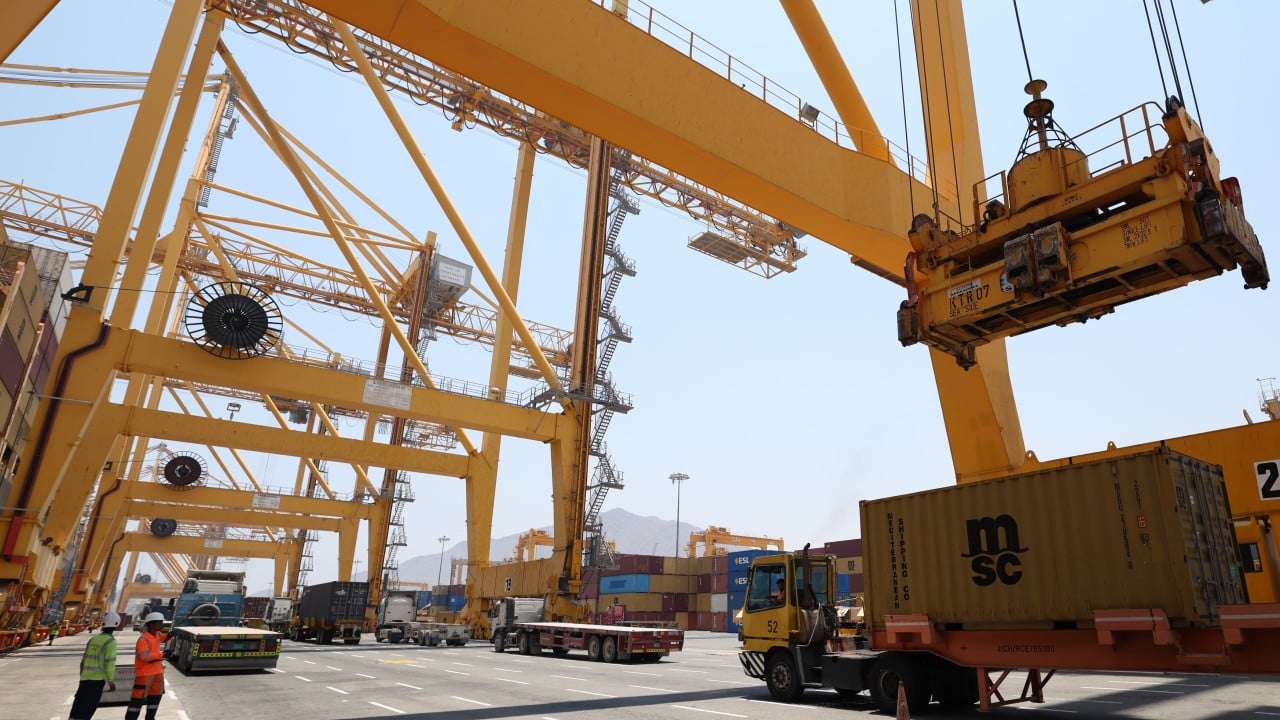
UAE’s Hormuz workaround tries to bypass its trillion-dollar economic heart
The News
The United Arab Emirates aims to reduce its reliance on the Strait of Hormuz to zero, despite its major ports—Jebel Ali and Khalifa—being located within the waterway. These ports handle most of the UAE's $1 trillion in annual non-oil trade, much of which is with Asia, and serve as a critical link in a logistics corridor from Singapore to Europe. The effort highlights the challenge of diversifying away from a strategic chokepoint that underpins the country's economy.
Infographic
No infographic was generated for this story. GreyNews is not leaving this spinning indefinitely.
The Analysis
Intelligence Brief
Analyzed · High confidence (80%)
Same as the summary above — this brief adds the distinct fields below.
Strait is a critical global energy and trade chokepoint.
Jebel Ali and Khalifa ports form a vital link in a logistics corridor stretching from Singapore to Europe.
5 claims still need verification.
No forecast extracted yet.
Key findings
Jebel Ali and Khalifa ports are located inside the Strait of Hormuz waterway.
South China Morning Post- Strait is a critical global energy and trade chokepoint.
- UAE seeks to reduce vulnerability to Iranian influence.
Trust Breakdown
Plain English
Loaded language removedGeography has presented the United Arab Emirates with a situation: its government wants to reduce dependence on the Strait of Hormuz to 'zero', yet the ports that power its economy are located inside the waterway it hopes to avoid. Jebel Ali and Khalifa ports collectively handle most of the UAE's US$1 trillion in annual non-oil trade, much of which flows to and from Asia.
Emotionally neutral rewrite. Same facts, calmer framing.
What's next
This angle has contested claims
Claims
Jebel Ali and Khalifa ports are located inside the Strait of Hormuz waterway.
South China Morning PostJebel Ali and Khalifa ports collectively handle most of the UAE's annual non-oil trade.
South China Morning PostThe UAE's annual non-oil trade is valued at US$1 trillion.
South China Morning PostMuch of the UAE's non-oil trade flows to and from Asia.
South China Morning PostJebel Ali and Khalifa ports form a vital link in a logistics corridor stretching from Singapore to Europe.
South China Morning PostBias & Framing
- anchoring: US$1 trillion in annual non-oil trade
- framing_effect: quite the quandary,bypass its trillion-dollar economic heart