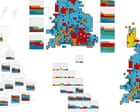
How could Britain look under proportional representation? See the results for your area
The News
The Guardian has published exclusive analysis showing how different voting systems, including proportional representation and first past the post, would alter seat distribution in the UK parliament based on current polling data. The analysis includes visualizations for each area. Under the current FPTP system, Reform UK would secure only about 30 seats, while other systems would yield different outcomes. The findings highlight the potential impact of electoral reform on party representation.
Infographic
The Analysis
Intelligence Brief
Analyzed
Same as the summary above — this brief adds the distinct fields below.
Analysis reveals wildly different seat totals under different voting systems.
The analysis includes visualisations that show how the UK parliament could change under different voting systems.
3 claims still need verification.
No forecast extracted yet.
3 unresolved.
Key findings
New analysis produced exclusively for the Guardian shows how different voting systems would return wildly different seat totals in the UK parliament based on current polling.
The Guardian- Analysis reveals wildly different seat totals under different voting systems.
- Current FPTP could leave Reform UK with very few seats despite polling support.
Plain English
Loaded language removedThese visualisations from polling modelling show how the UK parliament could change under different voting systems. New analysis produced for the Guardian reveals how different voting systems would return different seat totals in the UK parliament based on current polling. While the current first past the post (FPTP) system could leave Reform UK just 30…
Emotionally neutral rewrite. Same facts, calmer framing.
What's next
This angle has contested claims
Claims
New analysis produced exclusively for the Guardian shows how different voting systems would return wildly different seat totals in the UK parliament based on current polling.
The GuardianUnder the current first past the post system, Reform UK could be left with just 30 seats.
PredictionThe analysis includes visualisations that show how the UK parliament could change under different voting systems.
The Guardian