
Why China is rapidly expanding its land trade routes to Central Asia
The News
Over the past year, China has rapidly expanded its land trade routes to Central Asia under the Belt and Road Initiative, launching new railway and road connections to Uzbekistan, Turkmenistan, and Tajikistan. This expansion reflects growing trade momentum and Central Asia's rising role in continental logistics. Last year, China became the largest trading partner in the region, underscoring the strategic importance of these routes.
Infographic
The Analysis
Intelligence Brief
Analyzed
Same as the summary above — this brief adds the distinct fields below.
China became the largest trading partner for Central Asian countries
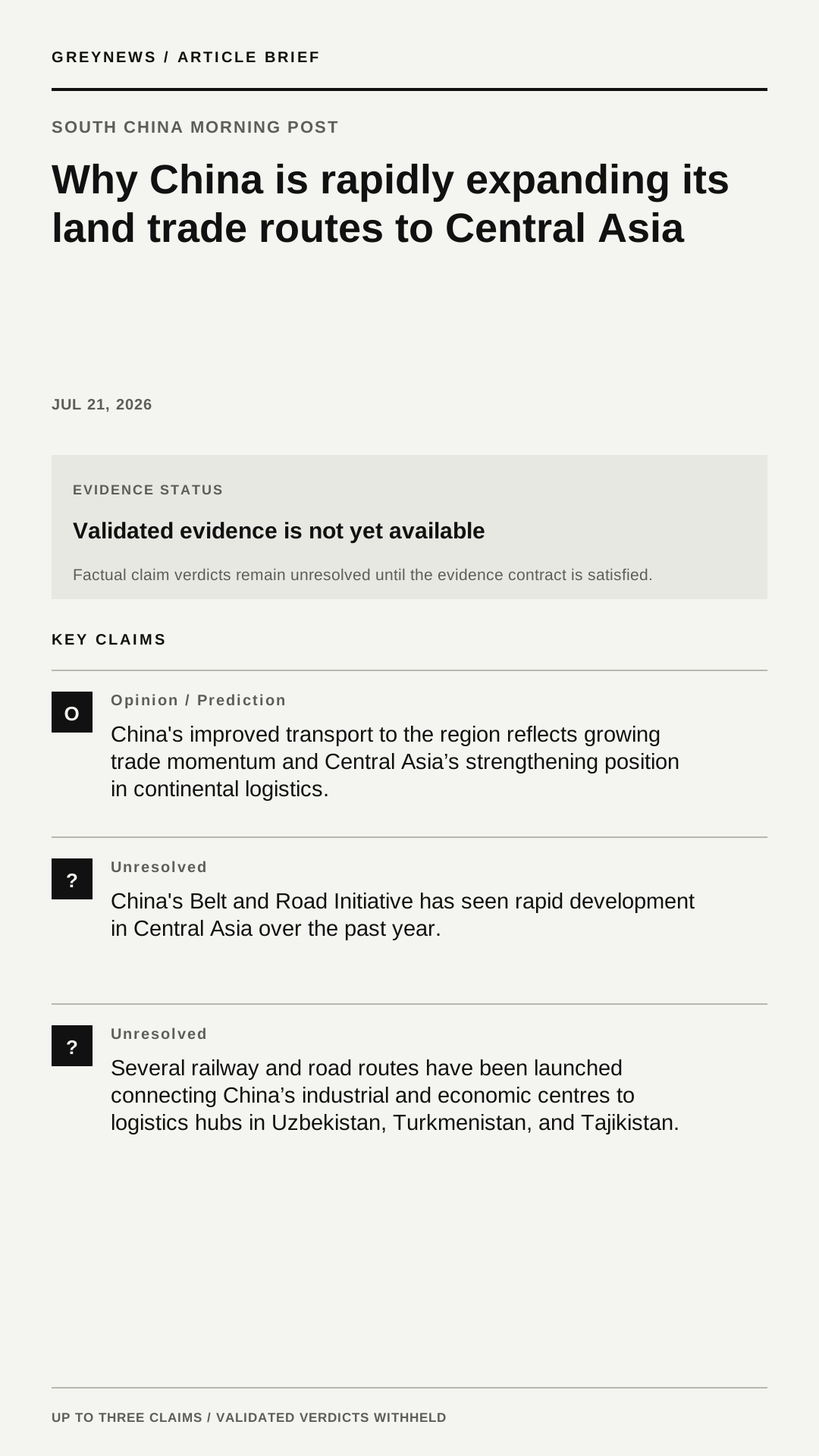
China's Belt and Road Initiative has seen rapid development in Central Asia over the past year.
4 claims still need verification.
No forecast extracted yet.
4 unresolved.
Key findings
China's improved transport to the region reflects growing trade momentum and Central Asia’s strengthening position in continental logistics.
Opinion- China became the largest trading partner for Central Asian countries
- New railway and road routes reduce trade costs and times
Plain English
Loaded language removedOver the past year, China’s Belt and Road Initiative has seen notable development in Central Asia. This has been evidenced by the launch of several railway and road routes connecting China’s industrial and economic centres to logistics hubs in Uzbekistan, Turkmenistan and Tajikistan.
Emotionally neutral rewrite. Same facts, calmer framing.
What's next
This angle has contested claims
Claims
China's improved transport to the region reflects growing trade momentum and Central Asia’s strengthening position in continental logistics.
OpinionChina's Belt and Road Initiative has seen rapid development in Central Asia over the past year.
South China Morning PostSeveral railway and road routes have been launched connecting China’s industrial and economic centres to logistics hubs in Uzbekistan, Turkmenistan, and Tajikistan.
South China Morning PostLast year, China became the largest trading partner of Central Asia.
South China Morning Post