
Americans feel pinch of continued Iran war: ‘It’s screwed everything up’
The News
The ongoing US-Israel war on Iran, which began five months ago, has become a prolonged conflict with no clear resolution, despite initial expectations of a short campaign. Iran's Supreme Leader was killed in early strikes, ceasefires have failed, and the Strait of Hormuz has been intermittently closed. American voters are feeling economic strain through higher fuel and grocery costs, as well as deployment orders, adding to existing debates over US foreign policy following the Gaza war.
Infographic
The Analysis
Intelligence Brief
Analyzed
Same as the summary above — this brief adds the distinct fields below.
Residual effects show up at the pump and on grocery bills.
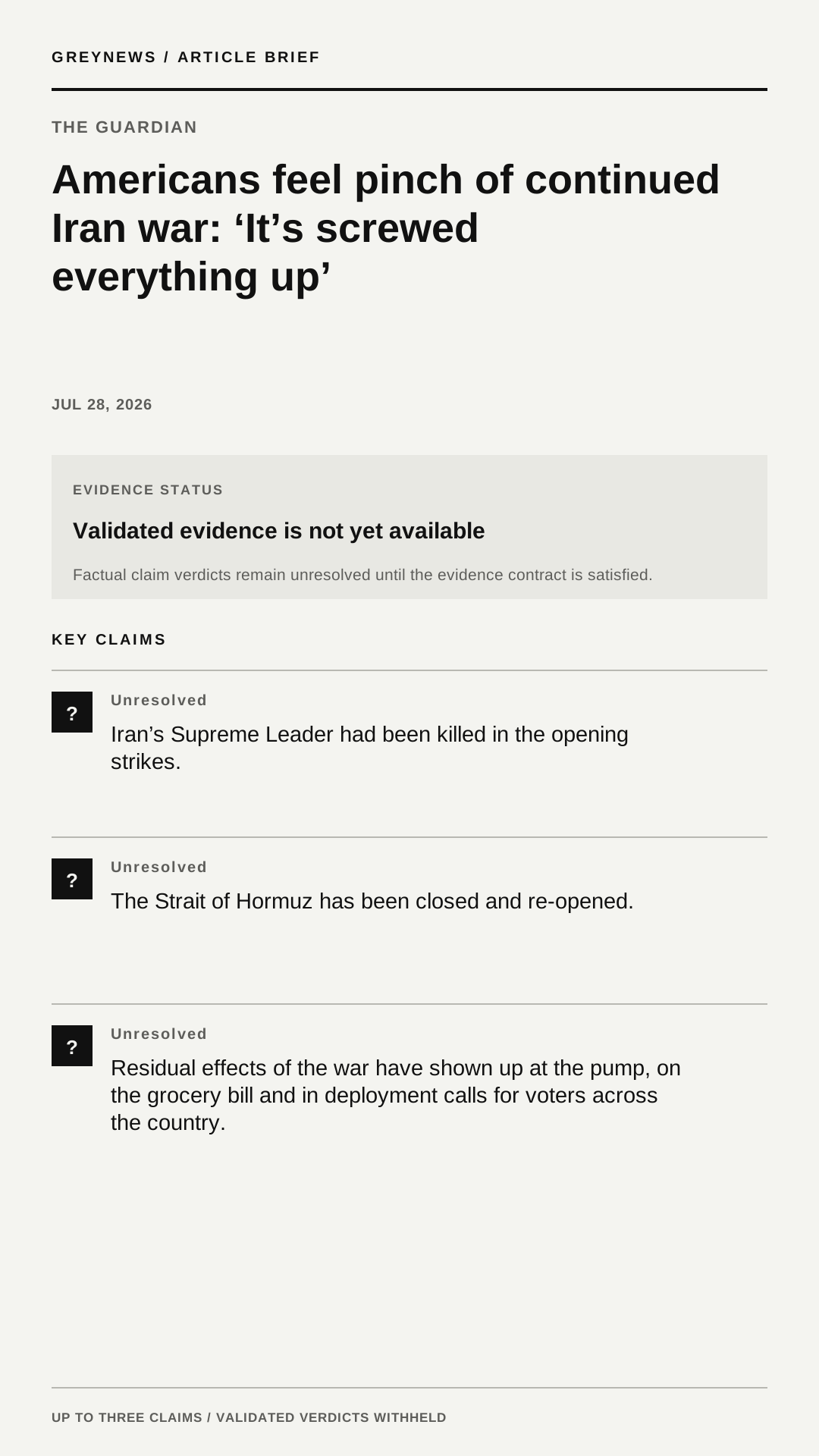
The Strait of Hormuz has been closed and re-opened.
5 claims still need verification.
No forecast extracted yet.
5 unresolved.
Key findings
Iran’s Supreme Leader had been killed in the opening strikes.
The Guardian- Residual effects show up at the pump and on grocery bills.
- The war's distant damage has tangible economic impacts on households.
Plain English
Loaded language removed<p>Whether in favor of or against the US-Israel war on Iran, people across the country are left holding the bill and wondering on its purpose</p><p>Five months after the United States and Israel started a historically unpopular war against Iran that was going to supposedly last weeks, the fighting has refused to resolve in victory, defeat or peace.
Emotionally neutral rewrite. Same facts, calmer framing.
What's next
This angle has contested claims
Claims
Iran’s Supreme Leader had been killed in the opening strikes.
The GuardianThe Strait of Hormuz has been closed and re-opened.
The GuardianResidual effects of the war have shown up at the pump, on the grocery bill and in deployment calls for voters across the country.
The GuardianFive months after the United States and Israel started a historically unpopular war against Iran, the fighting has refused to resolve in victory, defeat or peace.
The GuardianCeasefires broke down.
The Guardian