
Ex-BBC journalist awarded £20,000 after MI5 and PSNI unlawfully accessed phone data
The News
A former BBC journalist, Vincent Kearney, has been awarded £20,000 in damages after a tribunal found that MI5 and the Police Service of Northern Ireland unlawfully accessed his mobile phone data. The surveillance was aimed at identifying Kearney's sources, and the tribunal ruled it disproportionate and unlawful. This case highlights the protection of journalistic sources from state surveillance.
Infographic
The Analysis
Intelligence Brief
Analyzed
Same as the summary above — this brief adds the distinct fields below.
Tribunal found MI5 and PSNI actions unlawful
MI5 and PSNI unlawfully obtained data from Vincent Kearney's mobile phone.
5 claims still need verification.
No forecast extracted yet.
5 unresolved.
Key findings
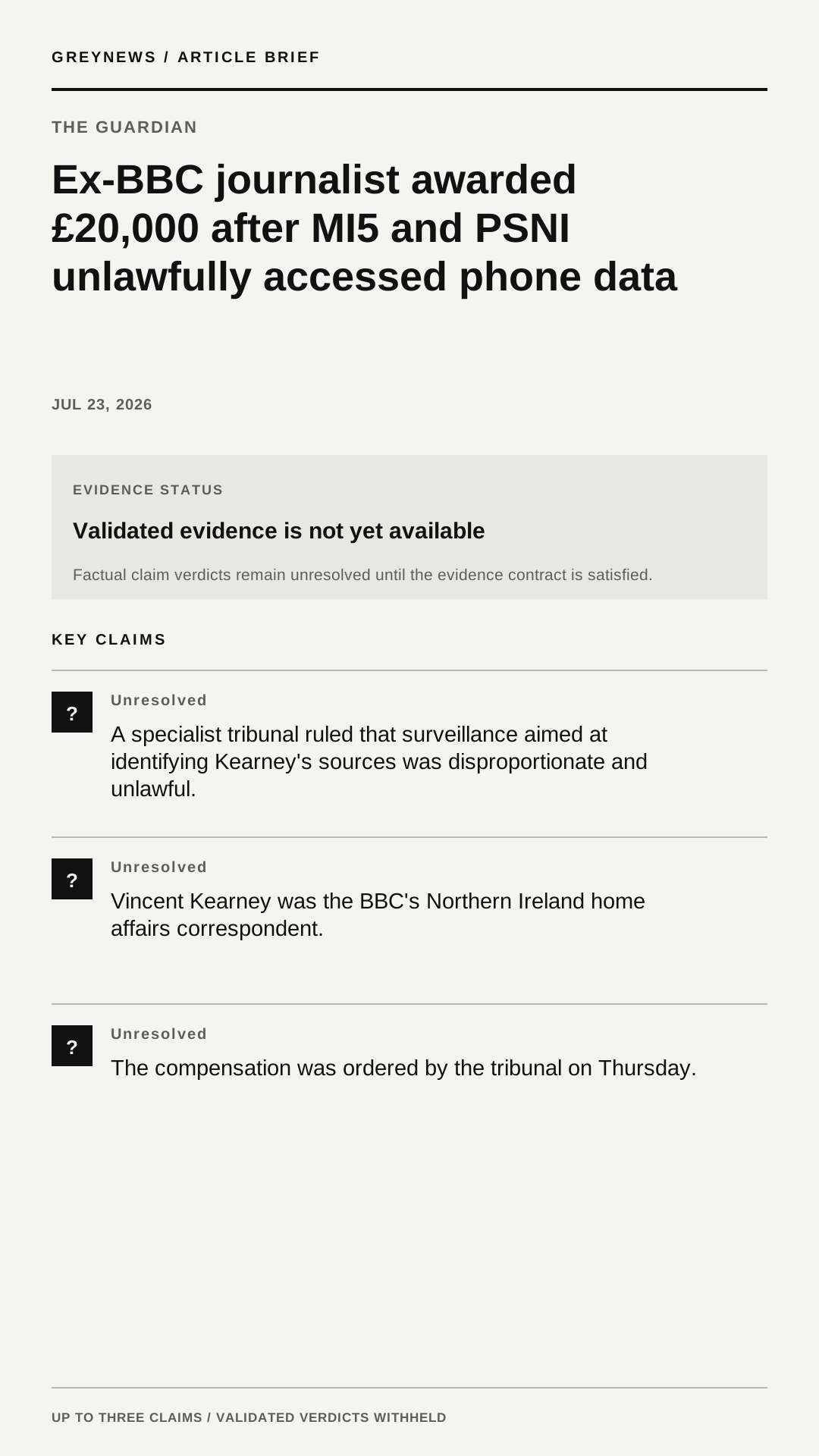
A specialist tribunal ruled that surveillance aimed at identifying Kearney's sources was disproportionate and unlawful.
The Guardian- Tribunal found MI5 and PSNI actions unlawful
- Establishes legal precedent for journalist protection
Plain English
Loaded language removed<p>Tribunal rules surveillance aimed at identifying Vincent Kearney’s sources was disproportionate and unlawful</p><p>A former BBC journalist has been awarded £20,000 in damages after MI5 and the Police Service of Northern Ireland unlawfully obtained data from his mobile phone.</p><p>A specialist tribunal on Thursday ordered the agencies to pay the compensation to Vincent Kearney for attempts to…
Emotionally neutral rewrite. Same facts, calmer framing.
What's next
This angle has contested claims
Claims
A specialist tribunal ruled that surveillance aimed at identifying Kearney's sources was disproportionate and unlawful.
The GuardianVincent Kearney was the BBC's Northern Ireland home affairs correspondent.
The GuardianThe compensation was ordered by the tribunal on Thursday.
The GuardianFormer BBC journalist Vincent Kearney was awarded £20,000 in damages.
The GuardianMI5 and PSNI unlawfully obtained data from Vincent Kearney's mobile phone.
The Guardian