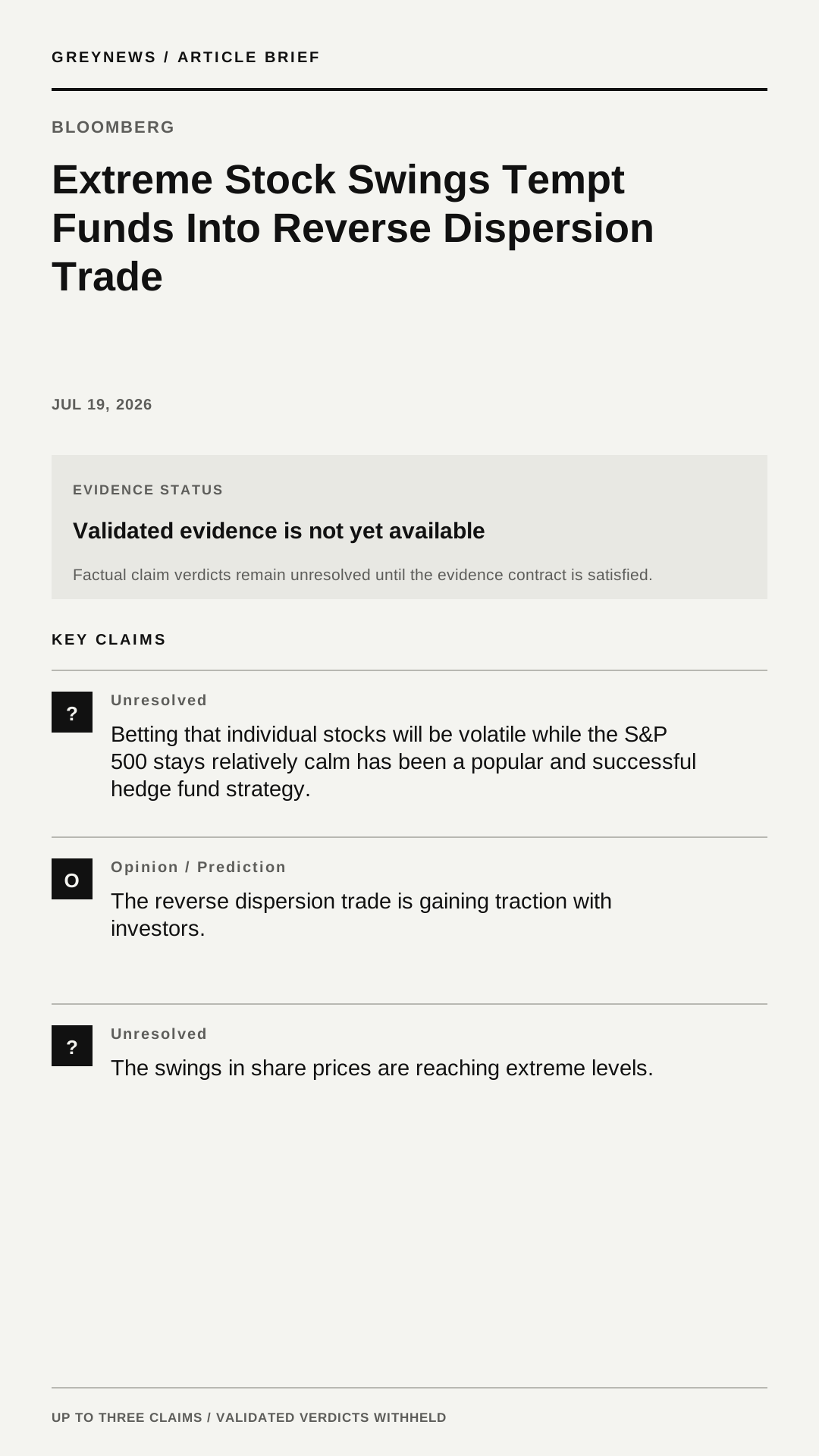
Extreme Stock Swings Tempt Funds Into Reverse Dispersion Trade
The News
A popular hedge fund strategy known as the dispersion trade, which bets on high volatility in individual stocks while the S&P 500 remains calm, has been successful. However, as stock price swings become extreme, some funds are shifting to the reverse dispersion trade, betting on individual stock calmness and index volatility. This trend is gaining traction among investors.
Infographic
The Analysis
Intelligence Brief
Analyzed
Same as the summary above — this brief adds the distinct fields below.
Cross-border capital flows influenced by US market volatility
Betting that individual stocks will be volatile while the S&P 500 stays relatively calm has been a popular and successful hedge fund strategy.
3 claims still need verification.
No forecast extracted yet.
3 unresolved.
Key findings
Betting that individual stocks will be volatile while the S&P 500 stays relatively calm has been a popular and successful hedge fund strategy.
Bloomberg- Cross-border capital flows influenced by US market volatility
- Geopolitical risks driving extreme swings
Plain English
Loaded language removedBetting that individual stocks will be volatile while the S&P 500 stays relatively calm has been a popular and successful hedge fund strategy. But with the swings in share prices reaching extreme levels, the reverse trade is gaining traction with investors.
Emotionally neutral rewrite. Same facts, calmer framing.
What's next
This angle has contested claims
Claims
Betting that individual stocks will be volatile while the S&P 500 stays relatively calm has been a popular and successful hedge fund strategy.
BloombergThe reverse dispersion trade is gaining traction with investors.
PredictionThe swings in share prices are reaching extreme levels.
Bloomberg